Getting to Mount Tai
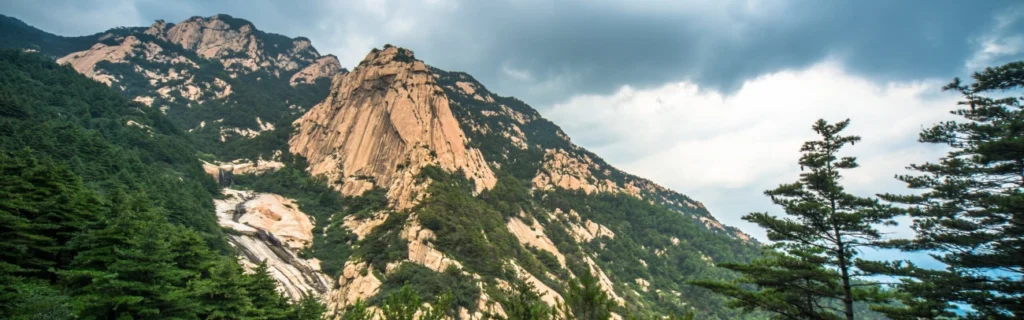
Mount Tai, or Taishan, is easily accessible from major Chinese cities, making your journey smooth and stress-free. Most visitors arrive in Tai’an, the gateway city, thanks to efficient high-speed trains running from Beijing, Shanghai, Jinan, and other hubs. These trains provide a quick, comfortable ride, setting the tone for your adventure ahead.
Once you reach Tai’an Railway Station, getting to the Mount Tai trailheads is straightforward. You can hop on local buses, grab a taxi, or use Didi (China’s ride-hailing app) for a convenient ride to your chosen start point. These options cater to different budgets and timing needs.
Before you begin the climb, consider visiting Dai Temple (Daimiao). This historic complex at the mountain’s base is the traditional starting point, offering a deep cultural immersion into the spiritual heart of Taishan. It’s a peaceful spot where you can soak in ancient rituals, inscriptions, and architecture—perfect for setting the mood.
Entry Tickets & Hours:
- Tickets are required for Mount Tai’s scenic area; prices vary by season.
- The mountain is generally open year-round, but best visited during spring and autumn.
- Early mornings are ideal for smaller crowds and cooler weather, especially if you’re planning the iconic Mount Tai sunrise.
Plan ahead by checking official schedules and weather updates. This ensures you maximize your visit, enjoy clear skies, and avoid peak holiday crowds.
Choosing Your Climbing Route
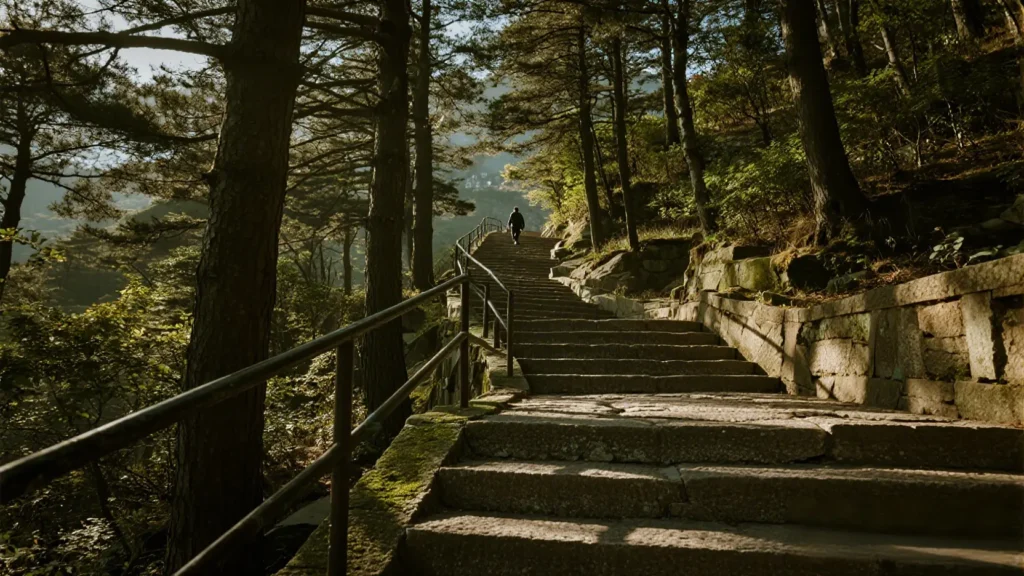
When planning how to climb Mount Tai, picking the right route is key. The most popular is the East Route, also known as the Imperial Road or the path from Red Gate to Hongmen. This classic trail is the most scenic and historic, featuring ancient temples, stone carvings, and plenty of cultural landmarks. It’s perfect for first-timers wanting the full Mount Tai sunrise experience along the traditional Taishan hiking routes.
If you prefer an easier option, the West Route—starting from Tianwaicun or Peach Blossom Ravine—is more accessible. This path offers bus and cable car options for parts of the way, making it ideal if you’re looking for a less strenuous climb or have mixed fitness levels in your group.
For those seeking a tougher challenge, there’s the Tianzhu Peak route. It’s more rugged and less traveled, suitable for experienced hikers wanting a quieter, off-the-beaten-track experience. You can also combine different sections of these routes depending on how much you want to hike versus using cable cars.
Here’s a quick comparison:
- East Route: About 7.5 miles (12 km), full hike day, strenuous but immersive.
- West Route: Shorter with cable car options, moderate difficulty.
- Tianzhu Peak: Rugged, challenging, requires good fitness.
For a detailed breakdown of distance, difficulty, and route options, check out our comprehensive Mount Tai hiking routes guide. Choosing the right path will set you up for a rewarding Mount Tai climb and a memorable sunrise at Jade Emperor Peak.
Planning Your Climb: Timing and Itinerary Options
When climbing Mount Tai, picking the right time and plan is key to a rewarding experience. Here’s a quick guide to help you decide the best way to tackle the sacred Shandong mountain.
Overnight Sunrise Climb
- Start time: Midnight or 2–3 AM
- Goal: Catch the famous Mount Tai sunrise from Jade Emperor Peak
- Why: Fewer crowds, magical dawn views, cooler temperatures
- Tip: Bring a headlamp and warm clothes—temperatures drop significantly at night
Daytime Hike
- Pros: Easier logistics with no night climbing, better for casual hikers
- Cons: More crowds, especially on weekends and holidays
- Best days: Weekdays to avoid heavy visitor traffic
One-Day vs. Two-Day Plans
| Plan Type | Description | Ideal For |
|---|---|---|
| One-day hike | Climb up and down in a single day, usually using cable car down to save time | Fit hikers with limited time |
| Two-day trip | Overnight stay near the summit to catch sunrise and explore temples next day | Those wanting a relaxed pace and sunset/sunrise views |
Best Seasons to Climb Mount Tai
- Spring (April–June): Clear skies, blooming flowers, and mild weather
- Autumn (September–November): Crisp air, beautiful foliage, less rain
- Avoid: Chinese public holidays and weekends to escape heavy crowds and higher prices
For detailed route maps and time estimates, check out this Mount Tai hiking routes guide. Planning your climb around these timing options will help you enjoy Mount Tai’s beauty comfortably and safely.
Step-by-Step Guide to the Classic East Route Climb
The classic East Route climb on Mount Tai starts at the Red Gate, where the trail begins with a gentle walk rich in history and culture. From here to Zhongtianmen (Midway Gate), you’ll pass ancient temples and stone inscriptions that set the tone for your ascent. This section is perfect for warming up and soaking in the sacred atmosphere.
Next comes the toughest part of the climb: from Zhongtianmen to Nantianmen (also known as South Heaven Gate). This stretch features the famous Eighteen Bends Taishan, a series of steep, winding staircases that test your endurance. It’s challenging but rewarding, offering breathtaking views and a deep sense of accomplishment once you reach Nantianmen.
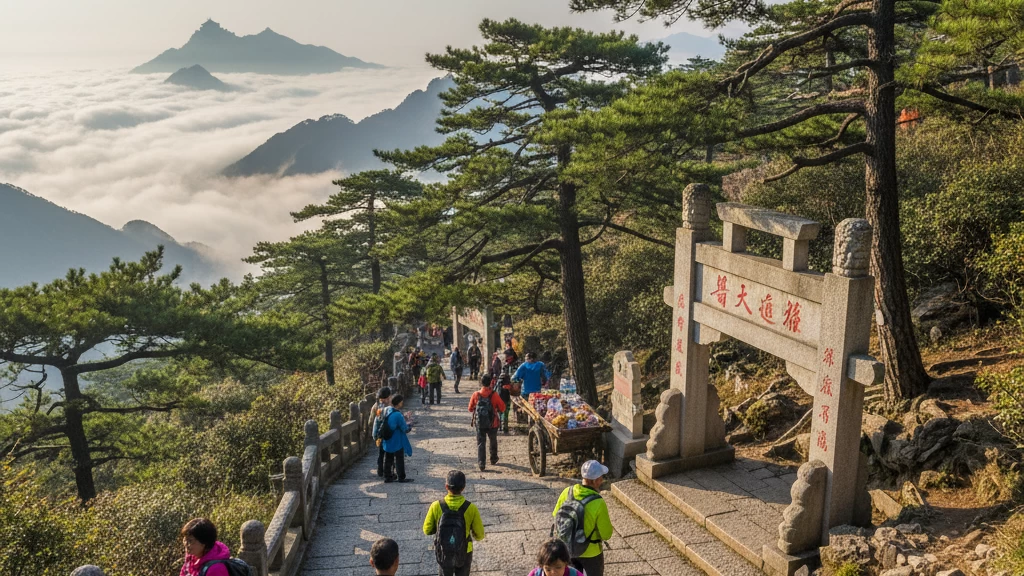
The final leg takes you from Nantianmen up to Jade Emperor Peak, the summit of Mount Tai. This stretch moves through Heavenly Street, lined with traditional shops and key landmarks. Along the way, don’t miss sights like Doumu Palace, viewing areas over the Cloud Sea, ancient stone carvings, and towering ancient pines that have stood for centuries.
For more details on the stairs and historic inscriptions you’ll encounter, check out this detailed guide on the Mount Tai steps, which breaks down the climb’s highlights and what to expect at each stage.
Essential Preparation and Packing List for Climbing Mount Tai
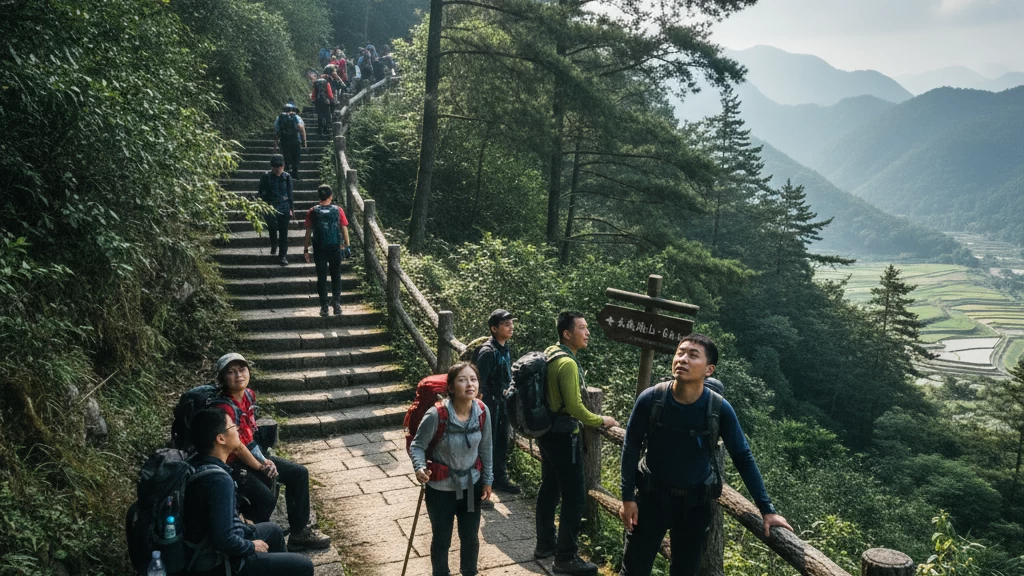
Climbing Mount Tai is a strenuous stair climb that demands good fitness and preparation. To get ready, start training with regular stair workouts or hikes on uneven terrain. Building leg strength and endurance will make the ascent much easier and more enjoyable.
Must-Have Items for the Climb
- Sturdy shoes: Wear comfortable hiking boots or trail shoes with good grip to handle thousands of stone steps.
- Water and snacks: Carry enough water to stay hydrated and energy-boosting snacks like nuts or energy bars.
- Layered clothing: Temperatures can change quickly during the climb, especially if you’re doing an overnight hike. Bring lightweight layers and a warm jacket for the cooler summit mornings.
- Headlamp or flashlight: Essential for early morning or nighttime climbs, especially if you’re aiming for a Mount Tai sunrise.
- Sun protection: Hat, sunglasses, and sunscreen protect you from strong sun exposure during the daytime.
- Rain gear: Weather can shift suddenly, so a compact rain jacket or poncho is a smart addition.
Health Considerations
Altitude on Mount Tai isn’t extreme, but you may still feel short of breath during steep sections. Keep hydrated and pace yourself. If you have any health concerns, consult a doctor beforehand.
On-Mountain Facilities
Mount Tai is well-equipped with shops and rest stops along the main routes for water, snacks, and breaks. You can also hire porters to carry your gear if needed, which can be a big help for heavier bags or multi-day trips.
For more details on practical climbing tips and accommodations, check out our guide to Mount Tai hostels and facilities. Preparing well ensures you enjoy the stunning views and rich history without any hassle.
Experiencing the Summit
Reaching the summit of Mount Tai is a rewarding experience with several must-see attractions. The Jade Emperor Temple is a highlight, offering stunning architecture and a glimpse into the mountain’s spiritual history. Nearby, the Bixia Temple is another important site, dedicated to the Taoist goddess of dawn and fertility. These temples provide a peaceful spot to reflect after your climb.
For many, the ultimate goal is catching the famous Mount Tai sunrise from Jade Emperor Peak. It’s best to arrive early to secure a prime viewing spot, as crowds gather before dawn. Because mornings can be very cold even in warmer seasons, you can rent coats and blankets near the summit to stay warm.
If you plan to stay overnight on Mount Tai to rest or catch sunrise without rushing, there are several accommodation options. These range from basic guesthouses to small hotels right at the top, offering convenience for early risers. Booking in advance is recommended, especially during peak seasons, to ensure a comfortable stay.
For more details on the best time and weather conditions to plan your summit visit, check out our guide on Mount Tai weather.
Descent Options and Return
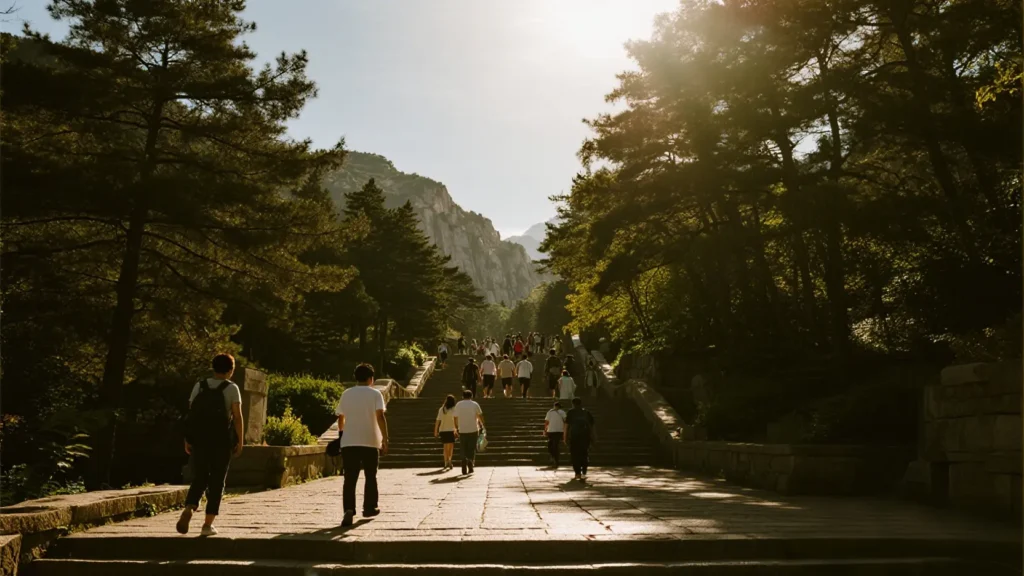
After reaching the summit of Mount Tai, choosing the best descent method is key to ending your climb comfortably and safely.
Hiking Down vs. Cable Car/Bus Combos
- Hiking down: Great for those who want to fully experience the mountain’s natural trails but can be very tough on your knees, especially after the strenuous climb.
- Cable car or bus combo: Highly recommended to save your legs and speed up the descent. You can take a cable car from the summit area down to Zhongtianmen or other stations, then catch a bus back to Tai’an.
| Descent Option | Pros | Cons |
|---|---|---|
| Hiking Down | Full trail experience, free | Strenuous, hard on knees |
| Cable Car + Bus | Quick, easy, less strain | Costs extra, less scenic |
Alternative Routes for Variety
If you want a change on your way down, consider:
- Taking a different route, such as descending via the West Route or the Peach Blossom Ravine, offering different landscapes and less crowded trails.
- Combining partial hiking with cable car rides to balance adventure with comfort.
Post-Climb Recovery in Tai’an
Back in Tai’an city, make sure to:
- Try local Shandong cuisine to restore energy—dishes like Taishan pancakes and Ji’nan roast duck are regional favorites.
- Relax at a local café or hot springs spa to soothe tired muscles.
- Explore the town’s peaceful parks or visit cultural spots like the Dai Temple if you didn’t have the chance before.
For more on the classic routes and how to balance your climbing plans, check out this detailed Mount Tai hiking routes guide. This will help you plan your ascent and descent smartly and enjoy every step of Taishan hiking.
Practical Tips and Safety Advice for Climbing Mount Tai
When planning your Mount Tai climb, it’s smart to prepare for crowds, changing weather, and limited English signage. The popular Taishan hiking routes, especially during peak seasons, can get busy early in the morning and around the summit. To avoid congestion, consider weekday climbs or starting your hike very early, like the overnight sunrise climb.
Weather on Mount Tai can shift quickly. Spring and autumn are the best seasons for clear skies and moderate temperatures, but always pack layers, rain gear, and sun protection. Night hikes require a reliable headlamp, and keep in mind that temperatures near Jade Emperor Peak can drop sharply, especially before sunrise.
Budget-wise, expect to pay for entry tickets, cable cars if used, local transport from Tai’an, meals, and possible porter services. Entry fees and transport cost vary by season, with higher prices during holidays. Planning your expenses ahead helps avoid surprises.
Sustainable travel is also important. Respect this UNESCO sacred mountain by sticking to marked trails, disposing of trash properly, and minimizing your environmental impact. This keeps Mount Tai beautiful for future visitors.
Common mistakes include underestimating the climb’s difficulty, not bringing enough water, and skipping the cultural stops like Dai Temple on your way up. Insider tips from Mount Tai Travel recommend starting at Dai Temple for a meaningful cultural experience and using the cable car for descent to save your knees.
For a complete guide on how to reach and explore, check out this detailed information on getting to Mount Tai and top things to do in Mount Tai. These resources can help you plan a safe, enjoyable, and memorable climb.