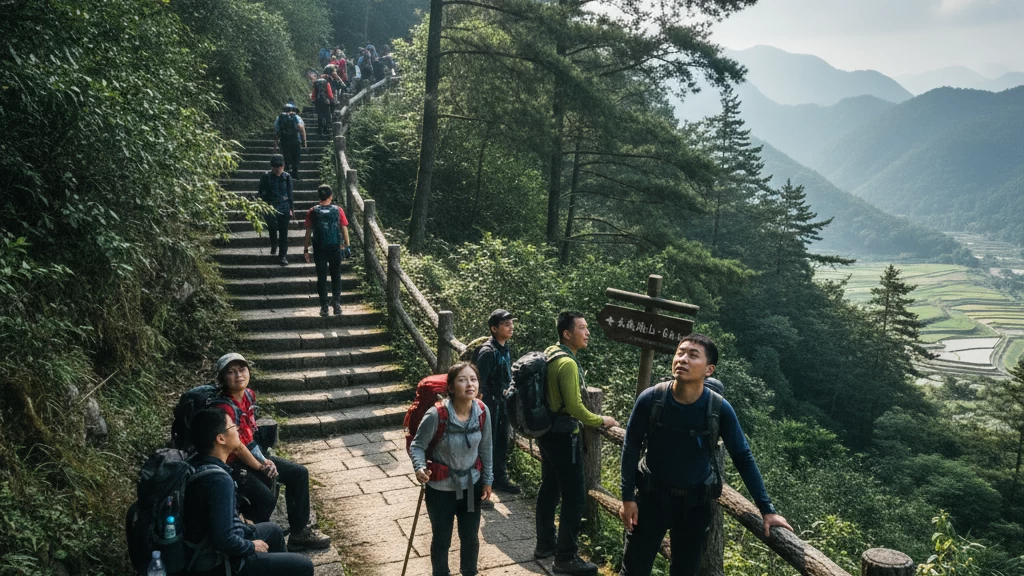
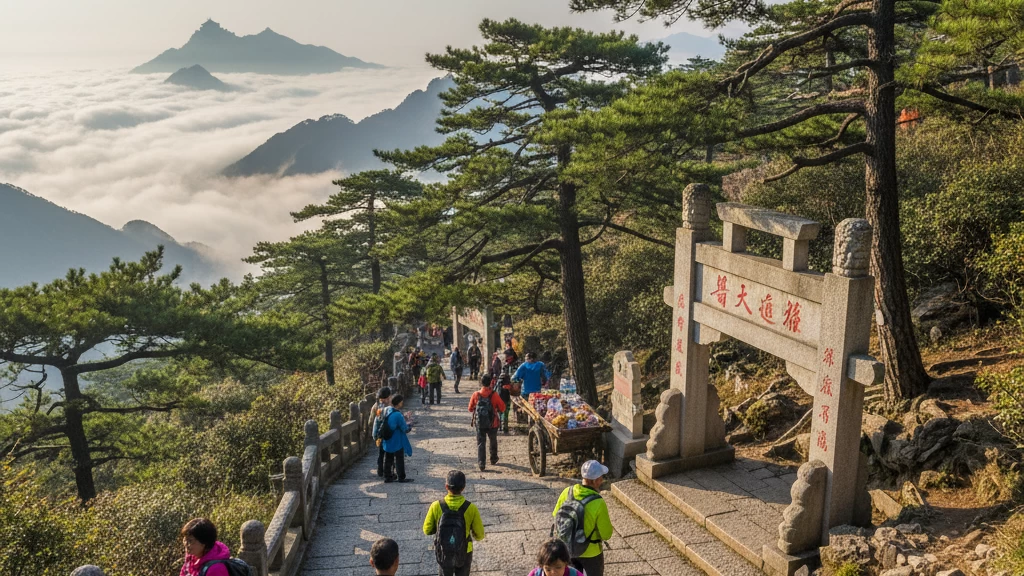
Planning a trip to China and wondering how to get to Mount Tai without wasting time or money?
You’re in the right place.
Mount Tai (Taishan) is one of China’s most sacred mountains – but figuring out trains, buses, and local transport in a new country can be confusing, even stressful. High-speed trains, normal trains, buses from different cities, airport transfers, taxis in Tai’an… it adds up fast.
In this guide, we’ll show you exactly how to get to Mount Tai in the easiest, fastest, and most cost-effective way – whether you’re coming from Beijing, Shanghai, Jinan, Qingdao, or flying in and using Jinan Airport and visa-free transit.
No fluff. Just clear routes, real travel times, typical prices, and step-by-step instructions for getting from the train station or airport all the way to Mount Tai’s main entrances (like Hongmen, Tianwai Village, and the cable car stations).
If you want a smooth, stress-free start to your Mount Tai adventure, keep reading.
Why Mount Tai Is Worth the Trip
If you’re wondering how to get to Mount Tai, the first thing I’ll say is this: it’s absolutely worth the effort. Taishan (Mount Tai) isn’t just another scenic mountain in China. It combines deep history, spiritual weight, and very real physical challenge in a way that few places can match.
UNESCO mountain with deep spiritual roots
Mount Tai is:
- A UNESCO World Heritage Site
- One of China’s “Five Great Mountains”
- A sacred peak in both Taoism and Chinese imperial history
For over 2,000 years, emperors came here to perform heaven-and-earth ceremonies. Poets wrote about it, philosophers climbed it, and you can still see ancient stone inscriptions carved into the rock along the hiking paths.
What makes it special for travelers:
- You feel the history as you climb. Temples, pavilions, and stone gates line the path.
- The mountain has a strong spiritual atmosphere without feeling overly commercial at every step.
- Locals genuinely treat it as a pilgrimage, not just a photo stop.
If you’re interested in culture, religion, or Chinese history, Mount Tai hits all three at once.
Classic Mount Tai sunrise pilgrimage
The most iconic experience on Mount Tai is the sunrise.
Here’s what most people do:
- Hike or ride up in the late evening or at night
- Reach the summit area near Jade Emperor Peak (Yuhuang Ding)
- Grab a spot on the viewing platform or near the temples
- Watch the sky shift from deep blue to bright gold over the plains of Shandong
Why it’s so memorable:
- The night climb is full of life. You’ll see families, students, and older hikers all slowly making their way up with flashlights and headlamps.
- On clear days, the sunrise really is spectacular. The clouds roll in below you, and you understand why the mountain has so many poems written about it.
- The sense of accomplishment is real. You earn that view, especially if you hike instead of taking the cable car.
If you’re not into night hiking, you can still go up by cable car early in the morning and catch the first light from the top.
Best time to visit Mount Tai (and when to avoid)
You can visit Mount Tai year-round, but some months are definitely better than others.
Best months:
- Late March–May:
- Comfortable temperatures for climbing
- Spring blossoms and fresh green scenery
- September–October:
- Clearer skies and great views
- Cooler weather, especially for steep steps
Decent but less ideal:
- June–August:
- Hot, humid, and often crowded
- Night climbs can still be good because it’s cooler in the dark
- November:
- Can be chilly but usually quieter
- Fewer leaves on trees, more muted scenery
Months and dates to avoid if you can:
- Chinese New Year / Spring Festival (dates move each year, usually Jan–Feb)
- Very crowded, higher prices, complicated transport
- Tomb-Sweeping Day (early April)
- Labor Day Holiday: May 1–3 (sometimes extended)
- Mid-Autumn Festival (Sept/Oct, moving date)
- National Day “Golden Week”: October 1–7
- This is the big one to avoid
- Massive crowds, sold-out train tickets, long lines for cable cars and buses
If your schedule is flexible, aim for a weekday in April, May, September, or October. You’ll thank yourself on those steep staircases.
How long you really need on Mount Tai (day trip vs overnight)
You don’t need a full week here. The real question is whether you’re doing a day trip or staying overnight.
Good rule of thumb:
- Minimum: 1 full day
- Ideal: 1–2 days, depending on how you want to climb
- Day trip – fast and focused:
Best for you if:
- You’re short on time but determined to see Mount Tai
- You’re okay using cable cars and don’t need to hike every step
What’s realistic in one day:
- Travel in by morning
- Take a shuttle + cable car up
- Explore the summit temples and viewpoints
- Walk some sections of the historic stairways
- Take cable car and bus back down
- Return to your base city in the evening
You can even do a long day trip from Beijing or Shanghai if you use high-speed trains and plan tightly.
- Overnight – more relaxed and immersive:
Better if:
- You want the sunrise experience
- You like hiking and don’t want to rush
- You’d rather not race the clock for your return train
Two common overnight styles:
- Night climb:
- Arrive in Tai’an in the afternoon or evening
- Start climbing from Tianwai Village or Red Gate at night
- Reach the summit before dawn, watch sunrise
- Come down by cable car or on foot, then sleep in Tai’an
- Classic two-day:
- Day 1: Arrive, check into hotel, explore lower temples or old town
- Day 2: Early start, hike or take cable car up, enjoy the summit, return in the afternoon or evening
If you have at least one night to spare, I strongly recommend staying overnight. It makes the whole Mount Tai trip feel like an experience, not a race.
In short: Mount Tai is worth it for the mix of culture, scenery, and that unforgettable sunrise on a sacred mountain. Once you decide when to go and how long to stay, figuring out how to get to Mount Tai becomes much easier—and a lot more exciting.
Where Mount Tai Is and How to Access It
If you’re planning how to get to Mount Tai, it helps to lock in the geography first. Once you see how Tai’an, Jinan, and the train stations fit together, the transport choices get much easier.
Mount Tai Location in Shandong
Mount Tai (Taishan, 泰山) sits on the edge of Tai’an city in central Shandong Province, between Beijing and Shanghai.
- Province: Shandong, East China
- Nearest city: Tai’an (泰安)
- Nearest big hub: Jinan (济南), the provincial capital
For a quick visual and extra context, I recommend checking this guide to the exact Mount Tai location in Shandong and how it sits between major Chinese cities.
Tai’an City vs Mount Tai Scenic Area
Think of this area as two overlapping zones:
| Place | What It Is | What You Do There |
|---|---|---|
| Tai’an city | Regular Chinese city | Stay in hotels, eat, shop, connect from trains/buses |
| Mount Tai scenic area | Ticketed mountain park on the city’s edge | Hike, ride cable cars, visit temples, see sunrise |
Mount Tai is not in some remote wilderness; it’s basically glued to Tai’an’s northern side. Most U.S. travelers will use Tai’an as the base, then hop a quick taxi or bus from Tai’an city to the Mount Tai entrances.
You can dig deeper into where Mount Tai is in China if you want to line it up with the rest of your China itinerary.
Main Arrival Hubs for Mount Tai
When people talk about “how to get to Mount Tai,” they’re usually talking about these three hubs:
| Hub | Best For | Notes |
|---|---|---|
| Tai’an High-Speed Railway Station (泰安站, often called Tai’an Bei by travelers) | Fast G/D high-speed trains from Beijing, Shanghai, Jinan | A bit outside the main city, best for modern HSR arrivals |
| Tai’an Railway Station (泰安火车站) | Older normal trains, some regional services | Closer to downtown Tai’an, easier for budget travelers |
| Jinan (Jinan Station / Jinan West) | Major rail hub and flight connection point | Lots of high-speed trains and buses to Tai’an |
Key points for U.S. travelers:
- High-speed trains: For most people, the easiest Mount Tai transportation is high-speed rail straight to Tai’an High-Speed Station.
- Normal trains: If you’re on a tighter budget and don’t mind slower travel, Tai’an Railway Station works fine.
- Jinan: If flights or train times line up better, go into Jinan first, then take a quick high-speed train or bus from Jinan to Mount Tai via Tai’an.
Main Entrances: Red Gate, Tianwai Village, Peach Blossom Valley
Once you’re in Tai’an, you still need to decide where to enter the Mount Tai scenic area. These are the three main gates most visitors use:
| Entrance | Chinese Name | Best For | Notes |
|---|---|---|---|
| Red Gate (Hongmen) | 红门 | Classic hike, history, “I climbed Taishan” bragging rights | Traditional starting point for the middle hiking route |
| Tianwai Village | 天外村 | Night climb, sunrise missions, cable car + shuttle combo | Easy access by city buses and taxis from Tai’an |
| Peach Blossom Valley | 桃花峪 | Gentler approach, families, cable car focus | Good if your priority is views over long stair climbs |
From a practical “how to get to Mount Tai” standpoint:
- Taxis and Didi can take you directly to any of these entrances.
- City buses connect both train stations and most hotel areas to Red Gate and Tianwai Village; Peach Blossom Valley is a bit more of a niche choice but still well signed.
- If you’re aiming for the classic Hongmen Red Gate starting point, make sure any taxi or bus you board clearly says “红门” or “Mount Tai Hongmen” on the sign/app.
Once you’ve picked your arrival hub (high-speed vs normal train, Jinan vs Tai’an) and your entrance gate (Red Gate, Tianwai Village, or Peach Blossom Valley), the rest of your Mount Tai plans fall into place fast.
High-Speed Train to Mount Tai
Why high-speed trains are the best option
If you’re asking how to get to Mount Tai and you’re coming from major Chinese cities, the high-speed train (高铁, gaotie) is usually your best move:
- Fast: Beijing–Tai’an in about 2–3 hours, Shanghai–Tai’an in about 4–5.
- Reliable: Frequent departures, less delay-prone than flying plus transfers.
- Comfortable: Clean, spacious, assigned seats, quiet cars.
- Budget-friendly: Often cheaper than flying once you factor in airport transfers.
- Direct to the mountain area: You arrive at Tai’an High-Speed Railway Station (Tai’an Bei), which connects easily to Mount Tai buses and taxis.
If you like to plan visually, a detailed Mount Tai map and access guide helps you see how Tai’an, the stations, and the mountain entrances connect.
Beijing to Mount Tai by high-speed train
From Beijing, the high-speed trains to Tai’an (Tai’an Bei / Tai’an North) are straightforward and perfect for a day or overnight trip.
- Route: Beijing South Railway Station → Tai’an High-Speed Station
- Travel time: Around 2–3 hours on G-trains
- Typical G-trains:
- G3xx / G4xx series (morning to evening), varying by timetable
- 2025 reference prices (one way, per adult):
- Second Class: about ¥230–¥280
- First Class: about ¥380–¥450
- Business Class: about ¥700–¥900
For a same-day hike, U.S. travelers usually pick:
- A morning G-train from Beijing South (around 7:00–9:00 a.m.)
- An evening return from Tai’an (around 6:00–8:00 p.m.), depending on your route and cable car use
Shanghai to Mount Tai by high-speed train
There are not as many direct Shanghai–Tai’an trains, so you’ll often connect via Jinan.
- Typical routes:
- Shanghai Hongqiao → Tai’an (direct G-train, limited)
- Or Shanghai Hongqiao → Jinan / Jinan East → Tai’an (transfer)
- Total travel time:
- Direct: about 4–4.5 hours
- With transfer via Jinan: about 4.5–5.5 hours depending on connection
- 2025 reference prices (one way, direct when available):
- Second Class: about ¥400–¥480
- First Class: about ¥650–¥780
- Business Class: about ¥1,300–¥1,600
If you’re coming from the U.S. and landing in Shanghai, this is a clean, jetlag-friendly move:
- Land → stay a night in Shanghai → high-speed train to Tai’an next morning
Jinan to Mount Tai by high-speed train
If you’re flying into Jinan Yaoqiang Airport, the high-speed hop to Tai’an is fast and cheap.
- Route: Jinan / Jinan East → Tai’an High-Speed Station
- Travel time: about 20–40 minutes depending on train type
- Frequency: Dozens of trains per day
- 2025 reference prices (one way):
- Second Class: about ¥30–¥45
- First Class: about ¥50–¥70
This is often the sweet spot for U.S. visitors: fly into Jinan, grab a short high-speed train, and be at Mount Tai the same day.
How to book high-speed train tickets (12306, Trip.com)
You have two main ways to buy tickets: Chinese official channels and international-friendly platforms.
1. 12306 (official Chinese system)
- Website & App: “12306 China Railway” (often requires Chinese ID or more steps for foreign passports)
- Pros: Lowest official price, no extra booking fee
- Cons: Interface is Chinese-first, registration and payment can be tricky without a Chinese phone and payment method
2. Trip.com and similar platforms
- Best for U.S. travelers:
- English interface
- Accepts U.S. credit cards
- Clear schedules and seat options
- Pros: Easy booking, English support, e-confirmation
- Cons: Small service fee per ticket
Buying at the station:
- You can still buy at the ticket counter or self-service machines (machines need a Chinese ID; counters accept passports).
- Trains can sell out on weekends/holidays, so I’d book at least 5–15 days ahead, and 20–30 days ahead for Chinese holidays.
Seat classes:
- Second Class: Best value, 3+2 seating, totally fine for 2–5 hours
- First Class: 2+2 seating, wider seats, more legroom
- Business Class: Very spacious, lie-flat style, but very expensive
- For most Mount Tai trips, Second Class is all you need.
What to expect on Chinese high-speed trains
If you’ve never taken a Chinese high-speed train before, here’s what it’s like in practice:
Luggage:
- There’s no formal weight check for normal travelers.
- Overhead racks for carry-ons and smaller bags.
- Luggage shelves at the ends of each car for larger suitcases (24–28″ is normal).
Comfort:
- Air-conditioned, clean, and generally quiet.
- Assigned seats; everyone sits where their ticket says.
- Power outlets (usually under the seat or on the wall; bring a small adapter if needed).
- Restrooms in each or every other car (Western-style and squat).
Food & snacks:
- Snack carts roll through with drinks, chips, instant noodles.
- Hot water dispensers are free in each car (handy if you bring your own coffee, tea, or noodles).
- You can bring your own food from the station—plenty of shops before boarding.
Onboard tips:
- Keep your passport and ticket/QR code handy; staff may check.
- Arrive at the station 30–45 minutes early—there’s airport-style security and waiting halls.
- Station announcements are usually in Chinese first, then English at major hubs.
If you want to go deeper on routes, entrances, and hiking strategies once you’ve locked in your train, a dedicated Mount Tai hiking and transport guide is a solid next step.
Getting from Tai’an High-Speed Station to Mount Tai
Tai’an High-Speed vs. Tai’an City Station
First thing: know which station your train uses.
-
Tai’an High-Speed Railway Station (Tai’an Bei / 泰安北站)
- On the Beijing–Shanghai high-speed line, outside the city.
- This is where most G/D high-speed trains arrive.
- About 30–40 minutes by bus to the Mount Tai scenic area.
-
Tai’an Railway Station (泰安站)
- Older city station on the slow (normal) rail line, closer to downtown.
- Better if you’re on a classic sleeper train.
- Easier access to local buses and short taxis to Hongmen.
If your ticket shows “泰安北”, you’re at the high-speed station; if it shows “泰安”, you’re at the city station. Many Beijing routes in this Beijing to Mount Tai train guide use Tai’an Bei, then swap to bus/taxi to reach the mountain.
Public Bus from Tai’an High-Speed Station to Mount Tai
From Tai’an Bei, city buses are the cheapest way to the mountain. Key options for Mount Tai transportation:
Main Useful Buses
| Bus | From → To (for Mount Tai) | Time (one way) | Notes |
|---|---|---|---|
| K37 | Tai’an Bei → Tianwai Village (Tianwai Cun / 天外村) | 30–40 min | Best direct pick for Tianwai Village bus and night-climb area |
| K3 | Tai’an Bei → downtown → Hongmen (Red Gate) → Tianwai Village | 40–50 min | Good if you want Red Gate (Hongmen) starting point |
Routes and numbers can shift, but K37 and K3 are the ones most travelers lean on for Tai’an to Tianwai Village bus connections.
Typical Schedules, Fares, and Payment
- Operating hours: roughly 6:30 a.m. – 7:30/8:00 p.m.
- Earlier / later “edge” trips vary by season.
- Frequency: about every 15–30 minutes during the day.
- Fare: usually ¥2–¥5 RMB (under $1 USD) per ride.
- How to pay:
- Cash in the box (exact change is easiest).
- Local transit cards (Shandong / Tai’an card).
- Some buses accept Alipay / WeChat Pay QR, but don’t rely on it 100% as a foreigner.
I tell U.S. travelers to keep a small stash of ¥1 and ¥5 notes just for buses.
Where to Get Off: Hongmen, Tianwai Village, Peach Blossom Valley
Use the stop names in Chinese on your phone to show the driver if needed.
-
For Red Gate (Hongmen / 红门)
- Get off at the “Hongmen” (红门) or “Taishan Hongmen” stop.
- This is the classic Red Gate to Mount Tai summit route starting point, right by the main ticket office and stone arch.
-
For Tianwai Village (Tianwai Cun / 天外村)
- Ride K37 or K3 to the final stop “Tianwai Village / 天外村游客中心” (Tourist Center).
- This is the main hub for the Mount Tai tourist buses, and the best place to base a night climb transport setup.
-
For Peach Blossom Valley (Taohuayu / 桃花峪)
- There’s usually no direct K-bus all the way from Tai’an Bei.
- Easiest play from the high-speed station:
- Take K37 or K3 to Tianwai Village, then
- Grab a short taxi/Didi to the Peach Blossom Valley entrance (about 15–25 minutes).
If you’re planning to hike up from Hongmen or mix routes, this breakdown of Mount Tai’s steps and main approaches gives solid context for which stop works best.
Taxi and Didi from Tai’an High-Speed Station
If you want fast, simple, or you’re arriving with luggage or kids, taxi or Didi is usually the best way to get from Tai’an high-speed train station straight to the gates.
Typical Taxi & Didi Costs (2025)
| Route (from Tai’an Bei) | Time | Day Price (approx) | Night Price (approx) |
|---|---|---|---|
| Tai’an Bei → Hongmen (Red Gate) | 30–40 min | ¥45–¥65 | ¥60–¥80 |
| Tai’an Bei → Tianwai Village | 30–35 min | ¥45–¥65 | ¥60–¥80 |
| Tai’an Bei → Peach Blossom Valley entrance | 40–50 min | ¥70–¥100 | ¥90–¥120 |
-
Didi (China’s Uber):
- Download and set up Didi Global before your trip.
- Use card or mobile wallet for payment when possible; carry cash as backup.
- Always choose official Didi trips in the app; skip random drivers offering rides in the hall.
-
Regular taxis:
- Join the official taxi queue outside the station exit.
- Make sure the driver turns on the meter (“dǎbiǎo / 打表”).
- Have your destination ready in Chinese:
- 红门游客中心 (Hongmen Tourist Center)
- 天外村游客中心 (Tianwai Village Tourist Center)
- 桃花峪景区 (Peach Blossom Valley Scenic Area)
Late-Night Arrival at Tai’an High-Speed Station
If your train reaches Tai’an Bei after ~8:00–8:30 p.m., assume the K3/K37 buses may not be running or will be very limited.
Here’s how I handle late-night Mount Tai travel:
- Primary plan:
- Use Didi or an official taxi from the station straight to:
- Your hotel in Tai’an city, or
- Tianwai Village if you’re going for a Mount Tai night climb.
- Use Didi or an official taxi from the station straight to:
- Backup plan:
- If taxis are in high demand, walk toward the main station exit and marked taxi zone; avoid private cars that approach you inside the station.
- If all else fails and you’re tired, grab any decent hotel near Tai’an Bei for a short sleep and head to the mountain early the next morning.
For U.S.-based travelers, my recommendation is simple:
- If you’ll arrive earlier than 7:00 p.m., buses are a cheap and easy win.
- If you’re landing late at night, just budget for a ¥60–¥80 taxi/Didi and enjoy a smoother start to your Mount Tai trip.
Normal Trains to Mount Tai on a Budget
If you’re asking “how to get to Mount Tai without spending a ton,” normal (slow) trains to Tai’an are still one of the best budget moves, especially if you’re coming from Beijing or Shanghai and don’t mind sleeping on the way.
When slow trains make sense
Use regular trains instead of high-speed when:
- You’re on a tight budget and want the cheapest way to reach Mount Tai.
- You like overnight sleeper trains and want to “save” a hotel night.
- You’re booking late for peak dates (Chinese holidays) and all high-speed seats are gone or very expensive.
- You’re okay arriving early morning a bit tired but close to the mountain.
Normal trains stop at Tai’an Railway Station (泰安站), which is closer to Mount Tai’s Hongmen (Red Gate) than the high-speed Tai’an Bei station. That alone can save you on local transport.
Beijing to Mount Tai by overnight train
From Beijing to Tai’an, the best budget option is usually an overnight sleeper:
- Typical departure: Beijing Railway Station or Beijing Fengtai in the evening.
- Typical arrival: Tai’an early morning (around 5–7 hours, depending on the train).
Example patterns (names/numbers change, but this is what to expect):
- Hard sleeper:
- Bunk-style beds (open compartments, 6 beds per section).
- Rough price range: about 200–260 RMB per person (2025 ballpark).
- Decent comfort if you’re not super picky and want to save money.
- Soft sleeper:
- Enclosed 4-berth cabins with a door, softer beds, more privacy.
- Rough price range: about 320–420 RMB.
- Best if you want sleep that feels closer to a budget hotel.
For a lot of travelers from the US, I’d say:
- If you’re okay with hostels → hard sleeper is fine.
- If you like at least a mid-range hotel feel → go soft sleeper.
Shanghai to Mount Tai by overnight train
From Shanghai to Tai’an, overnight normal trains are longer but still practical if you want to avoid high-speed fares:
- Typical departure: Shanghai Railway Station or Shanghai South, evening or late night.
- Typical travel time: roughly 8–11 hours, depending on the exact train.
- Arrival: usually early morning, so you can head toward Mount Tai right away.
Expected prices (approximate 2025 ranges):
- Hard sleeper: around 260–330 RMB.
- Soft sleeper: around 380–480 RMB.
Again, you’re trading time for money. If you sleep well on moving trains, you can step off in Tai’an and go straight into a Mount Tai climb or head for your hotel.
Travel times, budget, and comfort
Here’s the quick reality check for normal trains to Tai’an:
- Travel time:
- Beijing → Tai’an: roughly 5–8 hours overnight.
- Shanghai → Tai’an: roughly 8–11 hours overnight.
- Ticket prices (approximate, per person):
- Hard seat: cheapest (often under 150 RMB) but really not ideal for overnight; seats are crowded and you probably won’t sleep.
- Hard sleeper: budget-friendly sweet spot for most backpackers and students.
- Soft sleeper: more expensive, but still cheaper than high-speed plus a hotel night.
Comfort level:
- Hard seat:
- Only for serious budget travelers or short daytime hops.
- Expect crowds, noise, and limited sleep.
- Hard sleeper:
- Reasonably comfortable if you bring earplugs, a light hoodie, and are okay with shared open compartments.
- Beds are firm but usable, blankets and pillows provided.
- Soft sleeper:
- Much more private, quieter, and easier to actually rest.
- Good choice if you’re arriving and heading straight into a hike.
If you want deeper details on what to do once you arrive and how to handle the climb, I break that down further in my full Mount Tai travel guide at mounttaitravelguide.com/mount-tai/ (a solid resource to keep handy while you plan).
Pros and cons vs high-speed trains
Here’s how normal trains stack up against high-speed when you’re planning how to get to Mount Tai:
Pros of normal trains:
- Cheaper overall:
- Great for budget travelers, students, or anyone trying to keep costs down.
- Night travel = saved hotel:
- You sleep on the train and wake up near Mount Tai, which can make the trip feel more efficient.
- Closer station:
- Tai’an Railway Station is closer to the main Mount Tai entrances than Tai’an High-Speed (Tai’an Bei), which cuts down on taxi/bus rides.
- More last-minute chances:
- During busy times, sleeper tickets sometimes remain when popular high-speed trains are sold out.
Cons of normal trains:
- Slower:
- You’re spending most of a night on the train instead of a few hours on a fast G-train.
- Comfort can vary:
- Hard seat and hard sleeper are basic; washrooms and noise levels are a step down from high-speed.
- Less predictable sleep:
- If you’re not used to trains, you may wake up groggy and stiff, which makes the Mount Tai climb feel tougher.
- Language and logistics:
- Normal station signs and boarding can feel more chaotic than the high-speed system, especially if you don’t speak Chinese.
My take, if you’re traveling from the US and want to balance budget and comfort:
- Choose high-speed trains if:
- You’re short on time, prefer comfort, and are okay paying more.
- Choose normal overnight trains if:
- You’re on a tighter budget, like the idea of “sleep and arrive,” and don’t mind a more local, old-school China experience.
Either way, once you land in Tai’an, you’re just a short ride from Hongmen, Tianwai Village, or Peach Blossom Valley, and from there, your Mount Tai adventure really starts.
Long-Distance Buses to Mount Tai
If you’re comparing how to get to Mount Tai on a tight budget, long-distance buses can be a solid backup when trains are sold out or poorly timed. They’re slower than high-speed rail, but they connect Beijing and a lot of Shandong cities directly to Tai’an.
For a full transport overview, I also keep an updated Mount Tai route and transport guide that you can cross-check when you finalize dates.
When buses make sense
I only recommend a long-distance bus to Mount Tai when:
- High-speed train tickets are sold out for your date.
- You’re already near a long-distance bus station (for example, in Qingdao or Qufu).
- You prefer a direct point-to-point ride with fewer transfers, even if it’s slower.
- You’re trying to keep costs as low as possible and don’t mind 4–8 hours on the road.
Beijing to Tai’an by bus
If you miss out on a Beijing to Tai’an bus seat, trains are usually better. But if you want the bus:
- Departure stations: Liuliqiao Bus Station and (less often now) Yongdingmen area.
- Duration: About 7–8 hours, depending on traffic and rest stops.
- Typical price: Around ¥180–¥230 one way.
- Schedule: Usually morning to early afternoon; night buses are less common now and can change by season.
I’d still treat this as a backup option if Beijing to Mount Tai train tickets are gone, not your first choice.
Buses from Qingdao, Jinan, Qufu, and other Shandong cities
Within Shandong, buses can actually be convenient, especially if you’re not near a high-speed rail station.
-
Qingdao to Mount Tai (Tai’an)
- Duration: About 4–5 hours.
- Price: Roughly ¥130–¥160.
- Good if you’re doing a coastal stay in Qingdao first and then heading inland.
-
Jinan to Mount Tai (Tai’an)
- Duration: Usually 1.5–2 hours by bus.
- Price: Around ¥40–¥60.
- Generally, I still prefer the super quick Jinan to Mount Tai high-speed train, but if buses line up better with your schedule, they’re fine.
-
Qufu to Mount Tai (Tai’an)
- Duration: About 1–1.5 hours.
- Price: Around ¥30–¥40.
- Handy if you’re doing a Qufu to Mount Tai combo trip to see Confucius sites first.
You’ll also find frequent buses from other mid-sized Shandong cities, all feeding into Tai’an’s main bus stations.
How to find legit bus ticket counters (and avoid scams)
In China, long-distance bus scams mostly show up around big stations. I keep it simple:
- Buy at official bus station counters only (inside the building), not from people standing outside yelling destinations.
- Look for:
- Clear signage, destination boards, and numbered gates.
- Printed tickets with seat/coach info and a QR/barcode.
- Booking options that work well for US travelers:
- Station counters with cash.
- Hotel front desk or local travel desks arranging tickets for a small fee.
- Apps like Trip.com for some routes (not all buses are online).
- Ignore anyone who:
- Tries to walk you to a “private minibus” in the parking lot.
- Won’t give you a printed ticket.
- Promises a “faster” or “VIP” bus at double the normal price.
Comfort level, rest stops, and luggage rules
Chinese long-distance buses are basic but workable if you go in with the right expectations:
- Seats: Usually upright coach seats; older buses can feel worn. Don’t expect US-style luxury coaches.
- AC/heat: Typically available, but temperatures can swing either too warm or too cold. Bring a light layer.
- Rest stops:
- Stops every 2–3 hours at highway service areas.
- Expect squat toilets, convenience stores, and quick snacks.
- Luggage:
- Large bags go in the under-bus compartment; keep valuables and electronics with you.
- No strict weight checks like airlines, but don’t overdo it.
- On-board:
- Food options are limited; I always pack snacks and water.
- Charging outlets may or may not work—don’t rely on them.
Where buses drop you off in Tai’an and how to reach Mount Tai
Most long-distance buses will drop you at one of Tai’an’s main bus hubs, not directly at the mountain:
- Common drop-off points:
- Tai’an Long-Distance Bus Station (near the traditional Tai’an Railway Station).
- Tai’an East Bus Station (depending on route and operator).
- From there, to actually reach Mount Tai:
- For the Hongmen Red Gate starting point:
- Short taxi or Didi ride (usually 10–20 minutes, budget around ¥15–¥30).
- Some local buses run toward Hongmen; signs often say “泰山” (Taishan) or “红门” (Hongmen).
- For Tianwai Village (popular for night climbs and cable car access):
- Taxi/Didi from the bus station is usually the easiest move.
- Tell or show the driver “天外村” (Tianwai Village).
- For the Hongmen Red Gate starting point:
- If you arrive late at night:
- Expect fewer or no city buses, so plan on a taxi or Didi.
- Check your hotel location in advance and confirm that they can help you arrange early-morning or late-night transport to the mountain.
If you’re more of a planner and want to compare all your options (bus vs train vs self-driving) in one place, I keep that laid out in our main Mount Tai travel guide.
Flying to Jinan and Connecting to Mount Tai
If you’re based in the U.S. and looking up how to get to Mount Tai, flying into Jinan Yaoqiang Airport (TNA) plus a short high-speed train ride is often the most time-efficient combo, especially if you’re already flying domestically within China.
Why There’s No Direct Airport at Mount Tai
Mount Tai is a protected UNESCO World Heritage Site and one of China’s most sacred mountains. Building an airport right next to it would bring noise, pollution, and traffic into an area that’s meant to stay quiet and spiritual.
- The closest major airport is Jinan Yaoqiang International Airport (TNA), about 90–100 km (55–60 miles) from Tai’an, the city below Mount Tai.
- From TNA, you connect to Mount Tai via high-speed train, shuttle bus, or private transfer.
- This setup keeps the mountain environment cleaner while still giving you fast access.
Best Flight Routes to Jinan Yaoqiang Airport (TNA)
For U.S. travelers, you’ll almost always connect through a big Asian or Chinese hub before reaching Jinan.
Common routings:
- From the U.S. to Jinan (1–2 stops)
- U.S. → Tokyo/Seoul/Hong Kong/Taipei → Jinan
- U.S. → Beijing/Shanghai/Guangzhou/Shenzhen → Jinan
- Typical flight to Jinan for Mount Tai
- Book to “Jinan (TNA)” as final destination.
- Flight times from Beijing/Shanghai: roughly 1–1.5 hours.
- If you’re already in China:
- Frequent domestic flights to TNA from Beijing, Shanghai, Guangzhou, Shenzhen, Chengdu, Chongqing, and other major cities.
- For most U.S. travelers doing a multi-city China trip, I recommend:
Fly into a major hub → domestic flight to Jinan → high-speed train to Tai’an → Mount Tai.
Flying + High-Speed Train: The Most Balanced Option
Using a domestic flight plus high-speed rail is usually the best balance of time, comfort, and cost for Mount Tai transportation.
How it works:
- Step 1 – Fly to Jinan Yaoqiang Airport (TNA)
- Land in Jinan, clear immigration (if international), pick up your bags.
- Step 2 – Transfer to Jinan high-speed railway station
- Options:
- Metro: Jinan Metro Line (airport line) to downtown, then transfer if needed.
- Airport shuttle bus: Direct buses to Jinan Railway Station/Jinan East. Cheap, simple.
- Taxi or Didi: Fastest and easiest with luggage; budget around 70–120 RMB depending on traffic.
- Options:
- Step 3 – High-speed train to Tai’an High-Speed Railway Station (Tai’an Bei)
- Trains from Jinan/Jinan East to Tai’an take around 20–30 minutes.
- Tickets usually fall in the 50–90 RMB range for second class.
- Step 4 – Local transport from Tai’an to Mount Tai
- From Tai’an High-Speed Station, use bus, taxi, or Didi to reach:
- Hongmen (Red Gate) – classic hiking start.
- Tianwai Village – popular for cable car and night climb.
- Peach Blossom Valley – another entrance and cable car option.
- From Tai’an High-Speed Station, use bus, taxi, or Didi to reach:
This combo works especially well if you’re landing in Jinan midday or afternoon and want to sleep in Tai’an that same night.
Step-by-Step: Jinan Airport → Mount Tai (Practical Flow)
Here’s the simple, realistic route I recommend to U.S. travelers asking how to get to Mount Tai via Jinan:
- Arrive at Jinan Yaoqiang Airport (TNA)
- After you exit customs, follow signs for Metro / Airport Shuttle / Taxi.
- Jinan Airport → Jinan train station
- Easiest:
- Taxi/Didi to Jinan Station or Jinan East Station.
- Show the driver: “济南站” (Jinan Station) or “济南东站” (Jinan East).
- Cheaper:
- Airport shuttle bus to Jinan Railway Station.
- Or metro if you’re comfortable with transfers and have time.
- Easiest:
- Jinan → Tai’an High-Speed Railway Station (Tai’an Bei)
- Buy a high-speed ticket to “Tai’an” (泰安).
- Trains run frequently; ride time is usually around 20–30 minutes.
- If you like a smoother ride, choose first class; otherwise, second class is totally fine.
- Tai’an High-Speed Station → Mount Tai scenic area
- For the Red Gate (Hongmen) hiking start:
- Taxi/Didi directly to “红门” (Hongmen). Expect 30–40 minutes depending on traffic.
- For Tianwai Village (night climb or cable car):
- Taxi/Didi to “天外村” (Tianwai Village).
- For Peach Blossom Valley:
- Taxi/Didi to “桃花峪” (Peach Blossom Valley).
- Most rides from Tai’an High-Speed Station into town run 35–70 RMB; more late at night.
- For the Red Gate (Hongmen) hiking start:
Using 144-Hour Visa-Free Transit in Jinan for Mount Tai
If you’re a U.S. citizen or from another eligible country, you may be able to use 144-hour visa-free transit (TWOV) in Jinan and Shandong to visit Mount Tai without a full Chinese visa.
Key points to know:
- Where it applies
- Jinan Yaoqiang Airport (TNA) participates in 144-hour visa-free transit, covering travel within Shandong Province.
- Basic idea
- You must be in transit:
- Country A → Jinan (TNA) → Country B
(A and B must be different. For example: U.S. → Jinan → Japan.)
- Country A → Jinan (TNA) → Country B
- You must be in transit:
- What you can do
- You can leave the airport and stay in Shandong (including Jinan, Tai’an, Mount Tai, Qingdao) for up to 144 hours.
- Why this helps Mount Tai trips
- It’s perfect if you want a quick 3–5 day side trip to Mount Tai without going through a full visa application.
- Important
- Rules change. Before you fly, always double-check:
- Official Chinese embassy/consulate site.
- Your airline’s latest guidance.
- Rules change. Before you fly, always double-check:
I design Mount Tai travel plans assuming we confirm visa status first—don’t rely on old blogs alone for entry rules.
When Flying Makes Sense vs. Taking a Direct Train
For Mount Tai transportation, both flying and high-speed trains work. The best choice depends on your route, schedule, and how you like to travel.
Flying into Jinan makes sense when:
- You’re already planning multiple domestic flights within China.
- You find a cheap or convenient flight to Jinan that lines up with your dates.
- You’re short on days and want to land close to Mount Tai, not spend all day on the rails.
- You want to use 144-hour visa-free transit in Jinan as your legal entry setup.
High-speed trains beat flying when:
- You’re already in Beijing, Shanghai, Tianjin, Jinan, or nearby cities.
- You prefer:
- No airport transfers
- Simple check-in / boarding
- More legroom and easier luggage handling
- You’re trying to keep your trip streamlined:
- Beijing → Tai’an by high-speed train is often just as fast door-to-door as flying via Jinan once you include airport transfers.
My rule of thumb for U.S. travelers asking how to get to Mount Tai:
- If you’re landing in Beijing or Shanghai and going straight to Mount Tai, go direct by high-speed train.
- If you’re flying around China anyway or want the 144-hour transit, fly into Jinan Yaoqiang Airport (TNA) and connect to Tai’an by high-speed train, then head straight to Mount Tai.
Private Transfer and Self-Driving to Mount Tai
If you care about comfort and time more than squeezing every dollar, private transfer or self-driving is one of the easiest ways for how to get to Mount Tai, especially if you’re traveling from Jinan, Qingdao, or Jinan Airport with family, kids, or a lot of luggage.
When to Use a Private Driver or Car
I recommend booking a private driver to Mount Tai if:
- You’re landing at Jinan Yaoqiang Airport (TNA) late or early and don’t want to deal with bus or train transfers.
- You’re coming from Qingdao, Jinan, or Qufu with a family or group and want door-to-door service.
- You’re planning a Mount Tai night climb and need a guaranteed ride to Tianwai Village or Red Gate (Hongmen) at odd hours.
- You want a flexible schedule to stop at service areas, local restaurants, or combine Mount Tai with Qufu or Jinan in one day.
For most U.S. travelers, private transfer or Didi (China’s Uber) is a better choice than renting a car, because of the local license rules and different driving culture.
Booking a Private Transfer (Jinan, Qingdao, Jinan Airport)
We treat private transfers as a core service because they remove most of the stress:
- From Jinan city:
- Pick-up: your hotel near Jinan Station or Jinan West Station.
- Drop-off: Hongmen (Red Gate), Tianwai Village, or your hotel in Tai’an.
- From Jinan Yaoqiang Airport (TNA):
- Door-to-door from the arrivals hall to your Tai’an hotel or directly to Mount Tai entrances.
- From Qingdao:
- Good option if you’re doing a Shandong loop (Qingdao → Mount Tai → Qufu/Jinan).
- How to book:
- Through trusted Chinese apps (Trip.com, local car services).
- Via your hotel concierge in Jinan, Qingdao, or Tai’an.
- Through our platform: we pre-set routes, English support, and clear pricing before you land.
Ask for:
- English or basic-English-speaking driver, if possible.
- Clear confirmation of pickup time, meeting point, and exact drop-off gate (Hongmen vs Tianwai vs Peach Blossom Valley).
Private Transfer Prices and Drop-Off Points
Prices change with fuel and holidays, but here’s a realistic 2025 ballpark:
- Jinan → Tai’an / Mount Tai
- Sedan (1–3 people): ¥400–¥600 (~$55–$85) one-way.
- Van (4–6 people): ¥600–¥800 (~$85–$110).
- Jinan Airport (TNA) → Tai’an / Mount Tai
- Sedan: ¥500–¥700 (~$70–$100).
- Van: ¥700–¥900 (~$100–$125).
- Qingdao → Tai’an / Mount Tai
- Long-distance sedan: ¥1,200–¥1,800 (~$165–$250) one-way.
Common drop-off points at Mount Tai:
- Hongmen (Red Gate) Parking Area – best for the classic stair hike.
- Tianwai Village (Tianwaicun) – great for the night climb route and for those using the Mount Tai tourist buses and cable car.
- Peach Blossom Valley – quieter access and another path to the cable car.
Inside Tai’an, if you’re not using a pre-booked car:
- Tai’an taxi price to Mount Tai (from city center or high-speed station): usually ¥25–¥45 (~$3.50–$6.50) to Hongmen or Tianwai Village.
- Didi to Mount Tai: similar or slightly cheaper than a taxi, app-based, easy if you’re used to Uber/Lyft.
Self-Driving Route Basics to Mount Tai
If you’re an expat in China or already hold a valid Chinese driver’s license, self-driving can work. Note: U.S. driver’s licenses are not legally valid in China; most short-term visitors should not plan to drive themselves.
Typical Mount Tai self-driving route options:
- Beijing → Mount Tai (Tai’an)
- Route: G2 Beijing–Shanghai Expressway almost all the way.
- Distance: ~480 km (300 miles).
- Time: 5–6 hours without heavy traffic.
- Shanghai → Mount Tai (Tai’an)
- Route: primarily G2, sometimes combined with regional expressways near Shandong.
- Distance: ~750–800 km (470–500 miles).
- Time: 8–9 hours.
- Nearby cities
- Jinan → Tai’an: ~90 km, 1–1.5 hours on expressway.
- Qufu → Tai’an: ~70–80 km, around 1–1.5 hours.
Highways, Tolls, Gas Costs, and Mount Tai Parking
You’ll drive mostly on national expressways (G-roads) with EZ-pass–style tolls:
- Tolls
- Beijing → Tai’an: around ¥250–¥350 (~$35–$50) one way.
- Shanghai → Tai’an: around ¥350–¥450 (~$50–$65) one way.
- Gas
- Regular gasoline is usually called “92#”.
- Expect roughly ¥0.8–¥1.0 per mile in fuel cost for a mid-size sedan, depending on your car and traffic.
Mount Tai parking near main entrances:
- Hongmen (Red Gate) parking lots
- Large, well-marked tourist parking.
- Daytime parking: usually ¥20–¥40 per day.
- Tianwai Village parking
- Big lots near the Mount Tai tourist bus hub.
- Similar rates; higher during peak holidays.
- Peach Blossom Valley parking
- Smaller lots, but usually less crowded than Hongmen.
- In all cases, you cannot drive your own car up the mountain; you park, then use tourist buses and/or cable cars.
Local Driving Tips, Holiday Traffic, and Navigation Apps
Driving in Shandong is straightforward on highways, but city traffic patterns are different from the U.S. I plan my own trips around these points:
- Holiday & weekend traffic
- Avoid self-driving during:
- Chinese New Year (Spring Festival)
- Qingming (Tomb-Sweeping)
- May Day (early May)
- Golden Week (October 1–7)
- Expect long delays near tolls and Mount Tai parking on these dates.
- Avoid self-driving during:
- City driving near Tai’an
- Watch for e-bikes and scooters weaving through lanes.
- Speed cameras and red-light cameras are common.
- Some streets near the scenic area can be one-way or temporarily closed for crowd control.
Navigation apps to use:
- Amap (Gaode 高德地图) – my top pick:
- Has an English interface option.
- Good real-time traffic and accurate routing to places like:
- “泰山红门” (Hongmen, Red Gate)
- “泰山天外村” (Tianwai Village)
- “泰山桃花峪” (Peach Blossom Valley)
- Baidu Maps (百度地图)
- Very accurate locally, but more Chinese-language heavy.
- For planning only (not live navigation in China):
- Google Maps or Apple Maps for big-picture routes; then recreate the route inside Amap/Baidu.
If you want zero hassle and no learning curve with Chinese road rules, a pre-booked private transfer or Didi to Mount Tai is the most U.S.-friendly way to get from Jinan, Qingdao, or Jinan Airport to the Mount Tai entrances safely and on your own schedule.
Local Transport in Tai’an to Reach Mount Tai Entrances
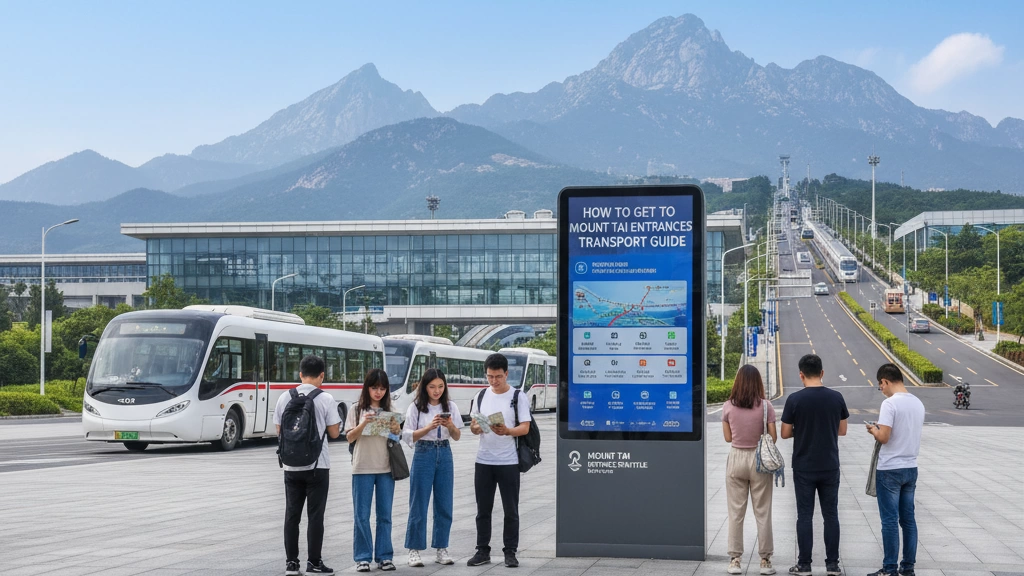
Timing your climb matters just as much as how to get to Mount Tai. Here’s how I’d plan it if you’re coming from Beijing, Shanghai, or Jinan and want a smooth, low‑stress trip.
Morning vs afternoon arrival
For most U.S. travelers, a morning arrival in Tai’an is the sweet spot.
- Best for full hikes: Aim to reach Tai’an (high‑speed or normal station) between 8:00–11:00 a.m. so you can start hiking by late morning and reach the summit well before dark.
- Better for weather: Mornings are usually cooler and clearer, especially in summer. By 11:00 a.m.–3:00 p.m. the stone steps heat up and the climb feels a lot tougher.
- Crowds: Tour groups spike from about 9:30 a.m.–2:30 p.m.; starting earlier or after 3:00 p.m. keeps things calmer.
- Afternoon is OK if you use the cable car: If you arrive Tai’an around 1:00–3:00 p.m., go straight to Tianwai Village or Peach Blossom Valley, use the Mount Tai cable car, and plan to walk only part of the route.
If your Mount Tai transportation options force a late afternoon arrival (after ~3:00 p.m.), I’d either:
- Do a short warm‑up walk near Hongmen (Red Gate) and stay in Tai’an, or
- Rest up and plan a Mount Tai night climb instead of rushing a full ascent.
Planning a Mount Tai night climb for sunrise
A night climb is one of the classic Mount Tai experiences and works well if you’re used to early flights and odd hours.
- When to start:
- For average hikers: start from Tianwai Village between 10:00 p.m.–12:00 a.m.
- For slower pace or lots of photo stops: start around 9:00–10:00 p.m.
- Target sunrise: Plan around a 5:00–5:30 a.m. sunrise (varies by month). You want to reach the summit area 30–60 minutes before so you can find a good spot.
- Route choice: The Tianwai Village night climb route is better lit and more popular at night than starting from Red Gate. It also lines up well with the tourist buses and cable car if you want to mix hiking and riding.
- Gear you actually need:
- Headlamp + small backup light
- Light layers (chilly summit even in summer)
- Snacks + water so you’re not relying only on vendors
- Jet lag advantage: Coming from the U.S., your body clock might make staying up late or waking crazy early easier in the first few days in China—use that to your advantage for a Mount Tai sunrise climb.
Optimal train times if you want to hike the same day
If you’re figuring out how to get to Mount Tai by train and still hike that day, build around these time windows.
- From Beijing (high‑speed rail):
- Ride a G‑train arriving at Tai’an High-Speed Station (Tai’an Bei) by 10:30–11:30 a.m.
- That typically means leaving Beijing South around 7:00–9:00 a.m.
- From Shanghai (high‑speed rail via Jinan):
- Plan to hit Tai’an by 12:00–2:00 p.m. if you’ll use a cable car, or earlier if you plan to hike the full way.
- Most routes go Shanghai Hongqiao → Jinan → Tai’an, so allow for the transfer time.
- From Jinan to Mount Tai (high‑speed):
- It’s a short hop; trains run frequently. I aim to arrive Tai’an no later than 1:00 p.m. for a comfortable same‑day climb.
- Rule of thumb:
- Full hike: Be at your starting gate (Hongmen or Tianwai Village) by 11:00 a.m. latest.
- Hike + cable car: Being at the gate by 2:00–3:00 p.m. is usually fine, as long as you respect last cable car times.
Booking on 12306 or Trip.com, I always work backwards from when I want to start climbing, not just when the train pulls into Tai’an. Add 60–90 minutes buffer for walking out of the station, grabbing a quick bite, and getting to the mountain by bus or Didi.
Mount Tai cable car hours and last rides
Mount Tai cable cars are a big part of the best way to reach Taishan’s upper area if you’re short on time or knees.
- General patterns (can vary by season and maintenance):
- First cable cars usually start around 7:30–8:00 a.m.
- Last uphill rides can end around 4:30–5:30 p.m.
- Last downhill rides are often around 5:30–6:30 p.m., a bit later in peak season.
- Why it matters:
- If you arrive late afternoon and miss the last cable car, you either hike all the way or turn back.
- For a night climb, you’ll likely hike up and use the cable car on the way down once it opens in the morning.
- My approach:
- Check the latest Mount Tai cable car price and hours a day or two before (hotel, recent reviews, or official site).
- Set a hard cutoff time: if I’m not at the cable car station by a certain hour, I switch to a shorter route or skip the summit that day.
Weather, heat, and crowd patterns by time of day
Time of day on Mount Tai changes everything—heat, air quality, and crowds.
- Early morning (before ~9:00 a.m.):
- Cooler temps, better Mount Tai weather forecast for clear views.
- Fewer tour groups; great for photos and a calmer climb.
- Late morning to mid‑afternoon (10:00 a.m.–3:00 p.m.):
- Hottest and most crowded, especially in summer and on Chinese holidays.
- Stone steps reflect heat; if you’re from the U.S. Midwest or South, think peak July humidity but on stairs.
- Higher chance of haze or smog blocking distant views on bad‑air days.
- Late afternoon to sunset (3:00–6:00 p.m.):
- Heat drops a bit; some tour groups thin out.
- Watch the clock so you’re not stuck descending in the dark if you’re not set up for that.
- Night (after ~8:00 p.m.):
- Cooler and often more comfortable for climbing, especially in July–August.
- Less crowd pressure, but you need good lighting and warmer layers for the summit.
If I’m planning how to get to Mount Tai from Beijing or Shanghai for a single day, I try to:
- Arrive early enough to avoid mid‑day heat, or
- Lean into a night climb + sunrise strategy and use the cooler hours to my advantage.
Money-Saving Tips for How to Get to Mount Tai
When I plan how to get to Mount Tai, I treat it like any smart trip from the U.S: book early, dodge peak crowds, and avoid small “gotchas” on the ground. Here’s how I’d keep costs down without killing the experience.
Book Train Tickets Smart (15–30 Days Rule)
For high-speed trains to Tai’an High-Speed Railway Station (Tai’an Bei) or normal trains to Tai’an Railway Station:
- Book 15–30 days in advance for popular routes like Beijing to Mount Tai or Shanghai to Taishan.
- Use 12306 (official China Railway app) or a major OTA like Trip.com if you prefer English and U.S. cards.
- Aim for:
- G/D high-speed trains in the morning or early afternoon (better chance of on-time and less crowded).
- Second class seats on high-speed trains – best value for most travelers.
- If you’re flexible, avoid Friday nights and Sunday afternoons, when locals travel home or return to big cities.
Choose the Right Station in Beijing and Shanghai
Picking the right departure station saves both time and cash when figuring out how to get to Mount Tai.
From Beijing to Mount Tai:
- Most high-speed trains run from:
- Beijing South Railway Station → Tai’an High-Speed Station (Tai’an Bei).
- Don’t waste money crossing town:
- Stay or base yourself closer to Beijing South if possible.
- Budget for 30–60 minutes taxi/metro time from popular areas like Wangfujing or Sanlitun.
From Shanghai to Taishan / Tai’an:
- Look for routes:
- Shanghai Hongqiao Railway Station → Jinan / Tai’an Bei.
- To save time:
- Try to fly into or stay near Hongqiao area (airport + station together), then take a high-speed train onward.
- Avoid transferring between Shanghai Station and Hongqiao with luggage unless the ticket price difference is huge.
Avoid Peak Chinese Holidays Around Mount Tai
If you care about budget and sanity, the dates you travel matter as much as how you get to Mount Tai.
Try to avoid:
- Spring Festival (Chinese New Year) – dates vary (late Jan–Feb), but it’s the worst time for sold-out trains.
- Qingming (early April) – Mount Tai is especially popular for traditional visits.
- May Day Holiday (around May 1, usually 3+ days) – high prices and packed trains.
- National Day / Golden Week (Oct 1–7) – record crowds, inflated hotel rates, and fully booked transport.
If you must travel then:
- Book your Beijing–Mount Tai or Shanghai–Mount Tai train as soon as tickets release.
- Expect to pay more for hotels and be ready for shoulder-to-shoulder crowds on the mountain buses and cable cars.
Use Student and Senior Discounts Correctly
Mount Tai and some transport options offer discounts, but only if you fit Chinese rules and have the right ID.
- At Mount Tai scenic area:
- Students (usually under 24 with valid student ID; Chinese rules focus on full-time students) may get reduced entrance tickets.
- Seniors (often 60+, sometimes tiered discounts at 60 / 65) can get lower ticket prices or free entry to certain areas.
- On trains:
- High-speed train discounts are limited and mainly for Chinese students with local documentation.
- As a U.S. traveler, assume no automatic student discount on trains unless clearly offered in the app.
- Always carry:
- Passport
- Student ID (if applicable)
- Be ready to show them at the ticket window or gate.
Avoid Scams Around Tai’an Railway Station
Most issues pop up at Tai’an Railway Station (the normal train station) rather than the high-speed Tai’an Bei. Common scams are easy to dodge once you know them.
Watch out for:
- “Helpers” offering cheap hotels or tours right at the exit – they usually push overpriced, low-quality stays or unnecessary add-ons.
- Unofficial ticket sellers claiming there are “no more trains” and pushing bus tickets or private cars.
- Fake taxi lines away from the main official queue.
What I do instead:
- Follow the official station signs to the taxi line or bus stops (look for buses like K3, K37 if heading toward Mount Tai scenic area).
- Use 12306 or Trip.com to confirm train times yourself – don’t trust random “agents” at the station.
- If someone approaches you with “special deal” transfers to Mount Tai, politely decline and keep walking.
Don’t Overpay for Taxis, “Guides,” and Souvenirs
To keep your Mount Tai travel budget under control, set a clear plan from station to mountain.
For taxis and Didi to Mount Tai:
- From Tai’an High-Speed Station (Tai’an Bei) to:
- Hongmen (Red Gate) or Tianwai Village: expect a reasonable fixed-range fare, usually on the meter plus small tolls.
- Always:
- Use the meter; if the driver refuses, get out.
- Or use Didi (Chinese Uber) from the app so prices are transparent.
- Have your destination written in Chinese:
- “泰山红门” (Hongmen / Red Gate)
- “天外村” (Tianwai Village)
For “guides” and souvenir traps:
- Skip “guides” who stalk you near stations or entrances. If you want a guide,:
- Book through a reputable platform ahead of time.
- Avoid shops directly outside Tai’an Railway Station and the first row of souvenir shops near entrances. Prices there are often marked up hard.
- For basics (water, snacks, ponchos):
- Buy at local convenience stores in Tai’an city or a supermarket instead of at the top of the cable car station.
Quick Checklist: Cheapest Way to Get to Mount Tai
If you want a simple, budget-friendly approach from the U.S.:
- Book high-speed train 15–30 days ahead (second class) via 12306 or Trip.com.
- Depart from Beijing South or Shanghai Hongqiao to Tai’an High-Speed Station when possible.
- Travel outside major Chinese holidays and weekends if you can.
- Use city buses or metered taxis/Didi from the station to Hongmen or Tianwai Village.
- Ignore random “helpers,” scalpers, and unlicensed guides around stations and entrances.
That combo keeps your costs predictable and your experience at Mount Tai a lot smoother.
Where to Stay Near Mount Tai by Budget
If you’re planning how to get to Mount Tai, choosing the right place to stay in Tai’an matters just as much as your train ticket. Where you sleep will decide how easy your early start is, how fast you reach Hongmen (Red Gate) or Tianwai Village, and how relaxed your whole Mount Tai trip feels.
I’ll break it down by budget and area so it’s easy to match how you travel in the US (convenience first, time is money) with how Tai’an actually works on the ground.
Best Areas to Stay in Tai’an for Mount Tai Visits
You basically have three practical zones:
-
Near Hongmen (Red Gate):
- Best if you want to do the classic hike up Mount Tai starting from the bottom.
- Fast access to the main Mount Tai entrance, local buses, and taxis.
- Easy to get to from Tai’an city (normal) railway station.
-
Near Tianwai Village:
- Best if you plan a night climb for sunrise or want quick access to the main cable car.
- Fewer big-name hotels, more budget and mid-range local options.
- Close to tourist buses that go up to Zhongtianmen cable car station.
-
Tai’an city center:
- Best if you want more food options, shopping, and familiar city vibes.
- Good for travelers who care more about comfort and amenities after hiking.
- Slightly longer ride to Mount Tai entrances (10–25 minutes by taxi/Didi), but very easy to manage.
If you’re coming from the US and want a smoother landing culturally and language-wise, I’d lean toward:
- City center if you like comfort, restaurants, and easy Western-style services.
- Hongmen or Tianwai Village if your top priority is hitting the trail or cable car as fast as possible.
Luxury Hotels Near Mount Tai (Ramada, InterContinental, etc.)
If you travel the way many US travelers do—clean, comfortable, straightforward—here are the luxury and upper mid-range picks that hit that sweet spot.
-
InterContinental Hotels (check: “InterContinental Tai’an” or similar):
- Usually one of the best options for international travelers.
- English service is more likely, rooms are modern, breakfast is predictable.
- Good for business + leisure travelers or families who want a quiet base, then day-trip to Mount Tai.
-
Ramada Plaza by Wyndham Tai’an (or similar Ramada-branded hotels):
- Recognizable international brand, often strong on value vs local “5-star.”
- Rooms tend to be spacious, comfortable, and familiar to US travelers.
- Good option if you want Western-style beds, reliable Wi-Fi, and solid front desk support.
-
Other local 4–5 star hotels near the mountain:
- Pros:
- Very close to Mount Tai scenic area entrances.
- Many have big lobbies, Chinese restaurants, and decent breakfast buffets.
- Cons:
- English may be limited.
- “5-star” in China can mean slightly different quality than in the US, so check recent reviews.
- Pros:
What I look for:
- Walking or short taxi distance to Hongmen or Tianwai Village.
- Clear mention of “Mount Tai” or “Taishan” in the hotel name/description.
- Recent reviews that mention “English” or “foreign guests” for smoother check-in.
Mid-Range Hotels Near Buses and Food
If you want clean, comfortable, and easy—and don’t need full-on luxury—mid-range hotels in Tai’an are probably your best value.
Ideal mid-range base:
- Near Tai’an city center or near the main roads that lead to Hongmen and Tianwai Village.
- Short walk to:
- City buses (like K1, K2, K3, K37 that head toward Mount Tai).
- Street food, small Chinese restaurants, and convenience stores.
What works well for most US travelers:
- Chinese chain hotels like:
- Ji Hotel (Jia) / JIANGUO-style brands
- Atour Hotel
- Hampton by Hilton (if available in Tai’an)
- Holiday Inn Express (if present)
- These usually offer:
- Clean rooms with working AC/heat.
- Decent mattresses.
- Simple breakfast (Chinese-style, sometimes Western options like toast and eggs).
- Mobile payment options, but also often accept foreign credit cards.
Mid-range sweet spots:
- Stay in the city center if:
- You want to eat well after hiking.
- You like having pharmacies, supermarkets, and coffee shops nearby.
- Stay closer to Hongmen/Tianwai if:
- You want to wake up, hop in a 5–10 minute taxi, and be at the gate.
Budget Hotels and Hostels Around Tianwai Village
If you’re planning a Mount Tai night climb for sunrise, staying near Tianwai Village is a big advantage. You can sleep a bit, eat, then walk over and start climbing around midnight or early morning.
What the budget scene looks like:
- Small local hotels, guesthouses, and hostels.
- Simple rooms, sometimes basic bathrooms, but usually clean enough for a short stay.
- Not much English, but staff are used to hikers and night climbers.
Why Tianwai Village is great for budget travelers:
- Walking distance to:
- Tianwai Village ticket and shuttle bus area.
- Night climbing starting point.
- Snacks, noodles, convenience stores for water and trail food.
- Cheaper than luxury areas, and you’re paying mainly for location.
Tips for US travelers on a budget:
- Don’t expect US-style “hostel culture.” It’s more functional than social.
- Check recent photos in reviews to judge cleanliness.
- Bring:
- Your own towel (just in case).
- Earplugs (thin walls are common).
- A power adapter and a portable charger.
City Center vs Near the Mountain: How to Choose
Ask yourself one simple question: is your priority comfort or convenience?
Choose Tai’an city center if:
- You want:
- More restaurant choices.
- Better chance of finding some Western-style food.
- Shopping malls, pharmacies, and easy evening walks.
- You don’t mind:
- A 10–25 minute taxi/Didi ride to the Mount Tai entrances in the morning.
- This feels most like staying in a mid-sized US city and commuting to a national park.
Choose near the mountain (Hongmen or Tianwai Village) if:
- You want:
- Minimal morning commute to the trail or cable cars.
- Easy night climb setup (Tianwai Village).
- You don’t need:
- Lots of nightlife or restaurant variety.
- Big hotel brands or international-style service.
My general rule:
- Short trip (1–2 nights) focused purely on Mount Tai? Stay near Hongmen or Tianwai Village.
- Longer trip or you care about comfort, food, and downtime? Base in the city center and ride taxis/buses to the mountain.
Booking on Chinese Apps vs International Platforms
Booking hotels in Tai’an is where US habits and China reality meet. Here’s how I handle it.
- Using international platforms (Booking.com, Expedia, Agoda, etc.):
- Pros:
- English interface and customer support.
- You can pay with US credit cards before you arrive.
- Easier to understand room types and cancellation policies.
- Cons:
- Slightly higher prices sometimes.
- Fewer local budget options listed.
- Best for:
- First-time travelers to China.
- Anyone who wants a smoother, familiar booking experience.
- Using Chinese apps (Ctrip / Trip.com, Qunar, Meituan):
- Trip.com (the international brand of Ctrip) is the easiest bridge:
- English app and website.
- Huge listing coverage, including local hotels close to Mount Tai.
- Often better prices and more room choices.
- Local Chinese-only apps (Meituan, Qunar) usually require:
- Chinese language skills.
- Chinese mobile number.
- Chinese payment methods (WeChat Pay, Alipay, etc.).
For most US travelers, I recommend:
- Use Trip.com for trains and hotels in Tai’an:
- Good prices.
- English support.
- Clear “near Mount Tai” filters and maps.
- Cross-check:
- Compare Trip.com prices with Booking.com or Agoda for your top 2–3 hotels.
- Choose the one with better cancellation rules and recent reviews.
Booking tips:
- Search using both “Mount Tai,” “Taishan,” and “Tai’an”:
- Mount Tai / Taishan = scenic area.
- Tai’an = the city.
- Check distance to:
- “Hongmen” (Red Gate).
- “Tianwai Village.”
- “Taishan Scenic Area” or “Mount Tai Scenic Area.”
- Filter for:
- English reviews in the last 6–12 months.
- “Foreign guests allowed” (most do, but always good to confirm with reviews).
If I were coming from the US and planning a focused Mount Tai trip, I’d:
- Use Trip.com or Booking.com to book:
- One night near Tianwai Village for a night climb, or
- Two nights in Tai’an city center plus taxis/Didi to the entrances.
- Prioritize:
- Location first (near entrances or easy bus routes).
- Cleanliness and recent reviews second.
- Brand name third.
That way, the “where to stay near Mount Tai” decision backs up your whole “how to get to Mount Tai” plan, instead of making your early start more stressful than the hike.
Planning a One-Day Mount Tai Trip (How to Get to Mount Tai in 1 Day)
If you’re based in China for work or travel and want to squeeze Mount Tai into a tight schedule, a one-day trip is absolutely doable with smart planning and a high-speed train. I design our Mount Tai day itineraries around US travelers’ habits: early start, clear structure, and backup plans so you don’t miss your train back.
Who a One-Day Mount Tai Visit Really Fits
A same-day Mount Tai run works best if you:
- Are okay with a very early departure and late return
- Don’t mind 4–6 hours total on trains (Beijing/Shanghai)
- Are reasonably active and can walk stairs for 2–4 hours
- Are fine not seeing every temple, but hitting the essentials
- Prefer to pay for the cable car instead of crushing your knees (most people)
If you’re traveling with young kids, seniors, or anyone with knee or heart issues, I’d push you to a 2-day plan instead. For a one-day sprint, efficiency wins over “see everything.”
Sample One-Day Mount Tai Itinerary (High-Speed Train + Cable Car)
This is the most realistic and comfortable option for most US travelers asking how to get to Mount Tai and back in one day.
Ideal direction:
- From Beijing → Mount Tai (Tai’an): best combo of train time and flexibility
- From Shanghai → Mount Tai: still doable, but more rushed and usually via Jinan
Rough timeline (adjust to actual train times):
- 06:30–07:30: High-speed train to Tai’an High-Speed Railway Station (Tai’an Bei)
- Beijing–Tai’an: about 2–2.5 hours on a G-train
- Shanghai–Tai’an: usually 4.5–5.5 hours with a change in Jinan
- 09:00–09:30: Arrive Tai’an Bei → bus K37 / taxi / Didi to Tianwai Village
- 10:00–10:30: Buy Mount Tai entrance ticket + shuttle bus up to Zhongtianmen
- 11:00–11:30: Take the Mount Tai cable car to the upper area near the summit
- 11:30–14:30: Walk around the South Heaven Gate, summit area, temples, viewpoints
- Slow, photo-heavy pace with time for a simple lunch at the top
- 14:30–15:00: Cable car back down → shuttle bus back to Tianwai Village
- 15:00–15:30: Taxi / Didi / bus back to Tai’an Bei
- 16:00–17:30+: High-speed train back to Beijing or Shanghai
Why this works:
- You minimize physical strain with cable car + tourist shuttle buses
- You still get the summit experience and classic Mount Tai views
- You keep a time buffer at the end in case of crowds or delays
One-Day Mount Tai Itinerary for Strong Hikers (No Cable Car)
If you’re fit, already living in China, and actually want the climb, this is the “respect the mountain” version of a one-day trip. It’s intense but rewarding.
Who this is for:
- You regularly hike or run and handle 5–7 hours of stairs
- You’re okay with a shorter summit stay
- You’re not bringing kids, elderly travelers, or big rolling luggage
Timeline example (from Beijing, direct to Tai’an):
- 06:00–07:00: Early G-train to Tai’an Bei
- 08:30: Taxi / Didi directly to Red Gate (Hongmen) – classic hiking start
- 09:00–13:00: Hike the middle route from Hongmen to the summit
- Plan 4 hours if you’re strong, 5+ if you like breaks and photos
- 13:00–14:30: Summit exploration, late lunch, quick temple visits
- 14:30–17:00: Hike down via Tianwai Village route or partially down then grab a local bus/taxi if your knees are done
- 17:00–18:00: Back to Tai’an Bei
- 18:30–20:30+: High-speed train back
Tips for this version:
- If you’re unsure about your pace, plan one way by cable car and one way on foot
- Start the climb no later than 9:00 a.m. or you’ll be racing the clock
- Use Didi rather than buses for the end of the day—your legs will thank you
Timing Trains So You Don’t Miss Your Last Ride
Train timing is where most one-day Mount Tai plans go wrong. I build in buffer as non-negotiable.
Simple rules:
- Choose arrival:
- Aim to reach Tai’an Bei by 9:30 a.m. at the latest for any meaningful day
- Choose departure:
- Beijing-bound: last train you target should be around 5:30–7:30 p.m.
- Shanghai-bound: usually after 6:00 p.m., and often via Jinan
- Always assume:
- 30–45 minutes from summit to cable car + shuttle + gate
- 30–45 minutes from Tianwai Village / Hongmen back to Tai’an Bei
- Set yourself a hard cutoff time to start heading down:
- With cable car: start down 2.5–3 hours before your train
- Hiking down: start down 4 hours before your train
Use 12306 or Trip.com to lock in trains at least 1–2 weeks in advance, especially on weekends or Chinese holidays.
When a One-Day Beijing–Mount Tai Trip Is Worth It
For most US travelers living in or visiting Beijing, a one-day Mount Tai day trip is very doable and often the best value.
It’s worth it if:
- You’re okay waking up early and don’t want to change hotels
- You use a G-train between Beijing South and Tai’an Bei
- You’re fine with cable car both ways to save time and energy
It’s not ideal if:
- You’re traveling during Golden Week or major Chinese holidays
- You absolutely want a slow, spiritual experience rather than a highlight reel
When a One-Day Shanghai–Mount Tai Trip Is Worth the Effort
From Shanghai, a same-day Mount Tai visit is more of a power move than a casual day trip, but it can still work.
It’s worth it if:
- You grab one of the earliest high-speed trains from Shanghai Hongqiao, usually connecting through Jinan
- You commit to the cable car and keep your summit time focused
- You’re okay with 10–12 hours door-to-door travel time
I usually recommend:
- Day trip if you’re short on time but really want Mount Tai checked off
- Overnight in Tai’an or Jinan if you want a more relaxed, cultural visit (plus better food stops and maybe a side trip to Qufu)
If you want, I can lay out specific train numbers and time windows from your exact starting city and season so you can plug them straight into 12306 or Trip.com and lock in a clean one-day Mount Tai itinerary.
Planning a Two-Day Mount Tai Trip
Why two days at Mount Tai is worth it
If you’re coming from the US, you’re already traveling a long way. Cramming Mount Tai (Taishan) into one day is possible, but two days is where it actually feels fun instead of rushed.
Here’s why I always recommend 2 days:
- You’re not racing the clock to catch a train back.
- You can wait out bad weather and still get views.
- You have time for both hiking and temples, not just “power stairs.”
- You can actually enjoy Tai’an city – food, old streets, night views.
- Sunrise or sunset at the summit feels less stressful when you’re not running on zero sleep.
If your China trip includes Beijing, Shanghai, and Mount Tai, this 2-day window hits the sweet spot between time and experience.
Sample two-day Mount Tai itinerary (overnight in Tai’an city)
This plan is for you if:
- You want to sleep in a real bed,
- Use the cable car at least one way, and
- Still walk a good chunk of the classic route.
Best base: Tai’an city center or near Hongmen (Red Gate) / Tianwai Village.
Day 1 – Arrival + half-day on Mount Tai
- Morning:
- Take a high-speed train to Tai’an High-Speed Railway Station (Tai’an Bei).
- From Beijing: about 2.5–3 hours.
- From Shanghai: about 3.5–4 hours (usually via Jinan).
- From Tai’an Bei, grab:
- Bus K37 or K3 to the Mount Tai scenic area, or
- Taxi/Didi straight to Hongmen or Tianwai Village.
- Take a high-speed train to Tai’an High-Speed Railway Station (Tai’an Bei).
- Midday:
- Check in to your hotel in Tai’an.
- Quick lunch near your hotel (Shandong food is solid – think dumplings, noodles, simple stir-fries).
- Afternoon:
- Head to the mountain via:
- Hongmen (Red Gate) if you want the classic middle route and a taste of the climb.
- Or Tianwai Village if you mainly want to use the cable car.
- Buy your Mount Tai entrance ticket (2025 pricing changes a bit year to year, but expect a single main ticket plus shuttle and cable car fees).
- Take the bus up to the middle section (if you’re using the cable car) and ride the cable car up to the upper mountain.
- Head to the mountain via:
- Late afternoon:
- Walk around the summit area (Nantianmen, Jade Emperor Peak/Yuhuangding).
- Visit a few temples and viewpoints:
- Bixia Temple (important Taoist site).
- Stele forests, old stone inscriptions, and classic “Mount Tai” photo spots.
- Evening:
- Take the cable car and shuttle bus back down.
- Dinner in Tai’an city – try local dishes and walk around the main streets for night views.
- Early night to rest up for more walking on Day 2.
Day 2 – Hike + old town wandering + train out
- Morning:
- Option 1 – Easy start:
- Sleep in a bit.
- Head back to the mountain, enter via Hongmen.
- Hike a section of the classic stone steps for the experience (you don’t have to go all the way to the top again).
- Option 2 – Stronger hike:
- Start earlier and hike from Hongmen up to the Mid-Heaven Gate (Zhongtianmen).
- Take the cable car from there if you don’t want to repeat the upper stairs.
- Option 1 – Easy start:
- Midday:
- Come back down (hiking or cable car + shuttle bus).
- Have lunch in Tai’an city.
- Afternoon:
- Explore Tai’an old streets and small temples at the foot of Mount Tai.
- Pick up simple souvenirs (avoid the pushy stands right at the gateways if you can).
- Late afternoon / evening:
- Head back to Tai’an High-Speed Station.
- Take a high-speed train to:
- Jinan (quick jump if you’re connecting to another city or flying out).
- Beijing or Shanghai if you’re continuing your big-city loop.
This 2-day Mount Tai plan fits easily into a Beijing–Mount Tai–Qufu or Shanghai–Jinan–Mount Tai route and works well with US travelers who like some hiking but don’t want a full-on endurance test.
Two-day Mount Tai night climb + sunrise itinerary
If sunrise on Mount Tai is on your bucket list, this is the way to do it. You’ll be tired, but it’s doable if you’re generally active.
Best base: Stay near Tianwai Village or Hongmen for easy access at night.
Day 1 – Travel + rest + prep
- Morning / midday:
- Arrive in Tai’an (high-speed train is still your best bet).
- Check into a hotel near Tianwai Village or Hongmen.
- Afternoon:
- Explore Tai’an city lightly.
- Pick up night-climb essentials:
- Headlamp or small flashlight.
- Snacks, water, a light jacket or hoodie (summit can be chilly even in summer).
- Eat an early and solid dinner.
- Evening:
- Sleep early if you can, or rest in your room.
- Aim to start your Mount Tai night climb between:
- 10:00 p.m. and midnight if you walk the entire way, or
- 1:00–2:00 a.m. if you plan to use a cable car when it starts (check seasonal hours – some night climbs rely fully on walking because cable cars start later).
Night climb route:
- Common starting points:
- Tianwai Village: popular for night climbs, straightforward route with more people around.
- Hongmen (Red Gate): more traditional, a bit tougher early on but very atmospheric.
- On the way up:
- Take your time. It’s a lot of stairs, and the night air can be humid.
- You’ll see plenty of Chinese hikers doing the same thing; this is a classic local experience.
- There are simple stalls along the way for hot tea, instant noodles, and small snacks.
Day 2 – Summit sunrise + relax
- Pre-dawn:
- Reach the top area around Nantianmen and Yuhuangding before sunrise.
- Find a spot for sunrise – you don’t need the absolute “best” rock ledge; just a clear east-facing view.
- Sunrise:
- Watch the sun come up over Shandong. This is why the night climb is worth it.
- Take your time exploring the summit temples and viewpoints after the initial crowds thin out.
- Morning:
- Decide how to get down:
- Cable car + shuttle bus down if your legs are shot.
- Hike down partway and then take the cable car.
- Hardcore only: hike all the way down.
- Decide how to get down:
- Midday:
- Return to your hotel in Tai’an.
- Shower, check out, and have lunch.
- Afternoon / evening:
- Depending on your energy and schedule:
- Stroll Tai’an’s old streets for a couple of hours, or
- Head straight to Tai’an High-Speed Station for your next leg.
- Depending on your energy and schedule:
This Mount Tai night climb plan gives you the sunrise experience without needing three days, which is perfect if you’re squeezing Mount Tai into a 7–14 day China trip from the US.
Where to fit in cable cars, temples, and old town time
You don’t have to choose between hiking, cable cars, and culture. On a 2-day trip to Mount Tai, you can fit all three:
Cable cars:
- Best for:
- Saving your knees on the descent.
- Saving time if your train schedule is tight.
- Smart ways to use them:
- Hike up from Hongmen to the Mid-Heaven Gate (Zhongtianmen), then cable car to the top.
- Cable car up, hike partway down, then bus/shuttle back to the city.
Temples:
- Don’t skip:
- Bixia Temple near the summit.
- Main ancient stone inscriptions and stele areas on the upper mountain.
- Temples at the base in Tai’an city if you want a lower-effort cultural walk after your hike.
Old town wandering:
- Good time slots:
- Late afternoon or evening on Day 1 after coming down.
- Midday or early afternoon on Day 2 before your train.
- What to do:
- Walk through older streets near the foot of Mount Tai.
- Try small restaurants and snack stalls that locals actually use.
- Avoid overspending at souvenir stands right at the scenic area gates – prices are usually better inside the city.
Combining Mount Tai with Qufu or Jinan in two days
If you’re planning your trip like most US travelers – limited days, but wanting “max value” – Mount Tai pairs very well with Qufu or Jinan in a short window.
Option 1: Mount Tai + Qufu (Confucius’ hometown)
- Best for: History and culture lovers.
- How it works:
- Day 1:
- Morning: Arrive in Tai’an, head to Mount Tai, do a lighter hike or cable car plan.
- Night: Stay in Tai’an.
- Day 2:
- Morning: Short walk in Tai’an or a quick visit to the base temples.
- Late morning: Take a high-speed train from Tai’an to Qufu East (about 30–40 minutes).
- Afternoon: Visit the Confucius Temple, Kong Family Mansion, and the Confucius Cemetery if time allows.
- Evening: Continue by train to your next city (Jinan, Beijing, or back to Shanghai).
- Day 1:
Option 2: Mount Tai + Jinan (capital of Shandong)
- Best for: Easy transfers and relaxed sightseeing.
- How it works:
- Day 1:
- Morning: High-speed train to Tai’an, head straight to Mount Tai.
- Afternoon: Hike + cable car combo.
- Night: Stay in Tai’an.
- Day 2:
- Morning: Optional short walk in Tai’an or another quick visit to the mountain’s lower area.
- Late morning: High-speed train Tai’an → Jinan (very short hop).
- Afternoon: Explore Jinan:
- Baotu Spring, Daming Lake, old city areas.
- Night:
- Fly out from Jinan Yaoqiang Airport, or
- Take a high-speed train onward to Beijing, Shanghai, or another major city.
- Day 1:
If you’re coming from the US and trying to keep your trip streamlined, I’d do:
- Beijing → Mount Tai (Tai’an) → Qufu or Jinan → Shanghai, or
- Shanghai → Jinan → Mount Tai → Qufu → back to Shanghai or on to Beijing.
A well-planned two-day Mount Tai trip fits cleanly into both of those routes without feeling rushed, and you get a solid mix of hiking, views, temples, and real local city life.
Final Prep and Packing Checklist for Mount Tai (2025)
You don’t need a ton of gear for Mount Tai, but a little prep saves money and stress. Here’s how I’d get ready, especially coming from the US and used to card payments, comfort, and clear info.
Mount Tai Entrance Ticket 2025: What’s Included
Prices change, but for 2025 you should expect roughly:
- Mount Tai entrance ticket:
- Adult: ¥120–¥140 (peak season), ¥100–¥120 (off-season)
- Students (China-verified) and some seniors: ~50% off
- Kids under a certain height are often free or discounted
- What’s usually included:
- Access to the main Mount Tai scenic area
- Key temples and viewpoints along the standard routes
- Basic tourist buses inside the scenic area are NOT included (usually extra)
- What’s NOT included:
- Cable cars
- Scenic shuttle buses
- Some special temples / side attractions with separate tickets
Always bring your passport; your entrance ticket is often tied to your ID.
Mount Tai Cable Car Price & Extra Transport Costs
You’ll almost definitely pay a few add-ons. Budget for these:
Typical 2025 Price Ranges (one way)
- Cable cars (subject to change, per person):
- Mid-mountain to summit cable car (Taishan Cableway): ~¥100–¥120 one way
- Peach Blossom Valley cable car: ~¥100–¥120 one way
- Scenic shuttle buses:
- From Tianwai Village or Peach Blossom Valley to cable car base: ~¥20–¥40 each way
- Other small costs:
- Lockers at entrances or cable car stations: ~¥10–¥30
- Public restroom upgrades (some premium toilets charge small fees)
- Snacks / water on the mountain (2x–3x city prices)
If you plan to hike up and cable car down, budget at least:
- Entrance ticket + 1 cable car + bus + food
→ Roughly ¥250–¥400 per person depending on season.
What to Wear and Pack for Mount Tai (Day & Night)
Think “lightweight hiking daypack” not “backpacking trip.”
Clothing (Layer Up)
Mount Tai can be hot at the base and chilly at the top, especially for sunrise:
- Base layer:
- Breathable t-shirt (quick-dry if possible)
- Mid layer:
- Light fleece or sweatshirt
- Outer layer:
- Thin windbreaker or rain jacket (mountain weather flips fast)
- Bottoms:
- Comfortable athletic pants or hiking pants
- Avoid jeans if you’re climbing stairs for hours
- Shoes:
- Snug sneakers or light hiking shoes with real grip
- No flip-flops, slides, or smooth-sole fashion sneakers
- Extras for night climb / colder months:
- Beanie or cap
- Light gloves
- Extra thin layer you can stuff in your pack
Gear You Really Want
- Headlamp (non-negotiable for night climbs)
- Hands-free, better than a phone flashlight
- Power bank
- For maps, tickets, and photos
- Refillable water bottle
- You can restock water on the way, just more expensive
- Small daypack
- 15–20L is enough; you don’t want a huge pack on thousands of stairs
- Basic medical
- Blister pads, band-aids, ibuprofen, any personal meds
- Sun protection
- Sunscreen, hat, sunglasses (the stone steps reflect light hard)
Optional but useful:
- Trekking poles (helpful on the way down if your knees complain)
- Light towel / wipes
- Thin emergency poncho
Cash, Cards, and Mobile Payments at Mount Tai
China is mobile-payment first, and Mount Tai is no different.
How to Pay
- Best setup for US travelers:
- WeChat Pay or Alipay connected to:
- A US Visa/Mastercard (now supported for foreigners), or
- A Chinese bank card if you have one
- WeChat Pay or Alipay connected to:
- Cash (RMB):
- Still good to carry ¥300–¥500 per person in cash:
- For small vendors
- If QR codes or apps glitch
- Still good to carry ¥300–¥500 per person in cash:
- Credit cards (Visa/Mastercard/AmEx):
- Often not accepted at small spots, local buses, or kiosks
- Big hotels may take them, but don’t depend on that on the mountain
ATMs Near Mount Tai
- ATMs:
- Reliable in Tai’an city and near major hotels
- Fewer options near the trailheads (Hongmen / Tianwai Village)
- If you rely on ATMs, withdraw in Tai’an city before heading to the mountain.
Best Weather & Air Quality Apps for Mount Tai
You want to watch both weather and AQI (air quality) before climbing.
Weather Apps
- Moji Weather (墨迹天气) – Local favorite, detailed China coverage
- QWeather / HeWeather – Reliable for Chinese cities and mountains
- Apple Weather / AccuWeather – Use as backup, but local apps are more precise
Set your location to:
- Tai’an (泰安) and/or
- Mount Tai / Taishan (泰山风景区) if the app lists the scenic area
Air Quality Apps
- AirVisual / IQAir
- China-specific AQI in WeChat Mini Programs
If AQI is over 150, expect hazier views and maybe skip the sunrise obsession.
Documents, Apps, and Offline Maps You Should Have
This is the stuff that makes the day smoother and avoids dumb problems.
Must-Carry Documents
- Passport (for:
- Train tickets
- Scenic area entry
- Hotels)
- China visa or 144-hour visa-free transit proof (screenshot rules & confirmation)
- Copies (can be photos on your phone) of:
- Passport info page
- Hotel confirmations
- Train e-tickets
Apps to Install Before You Go
- 12306 or Trip.com
- For Beijing–Mount Tai, Shanghai–Taishan, and Jinan–Mount Tai high-speed train tickets
- WeChat and/or Alipay
- Payment, translation mini-programs, ride-hailing links, chat
- Didi (Chinese Uber)
- For taxis from Tai’an Railway Station or Tai’an High-Speed Station (Tai’an Bei) to:
- Hongmen (Red Gate)
- Tianwai Village
- Peach Blossom Valley
- For taxis from Tai’an Railway Station or Tai’an High-Speed Station (Tai’an Bei) to:
- Translation app
- Google Translate or built-in WeChat translation for signs, tickets, menus
Offline Maps & Key Terms
- Maps:
- Gaode Maps (Amap) or Baidu Maps (best for China; use basic Chinese place names)
- Pre-download map tiles for Tai’an and Mount Tai
- Saved locations to pin:
- “泰山红门” – Hongmen / Red Gate
- “天外村” – Tianwai Village
- “桃花峪” – Peach Blossom Valley
- “泰安站” – Tai’an Railway Station (normal trains)
- “泰安高铁站 / 泰安北站” – Tai’an High-Speed Station (Tai’an Bei)
- Take screenshots of:
- Bus routes (K3, K37, etc. to Tianwai Village / Hongmen / Peach Blossom Valley)
- Your hotel address in Chinese
Quick Mount Tai Packing Checklist (Copy & Save)
On you:
- Passport + visa/144-hour docs
- Phone + power bank + charging cable
- ~¥300–¥500 cash
- Bank card(s) for backup
In your daypack:
- Light jacket + mid layer
- Comfortable walking shoes
- Headlamp (for night climb / early start)
- Water bottle
- Snacks (nuts, bars, jerky)
- Sunscreen, hat, sunglasses
- Small first aid: blister care, meds
- Tissues/wipes
If you sort this checklist before you leave your hotel, getting to Mount Tai and actually enjoying it becomes way easier—instead of burning time and energy on preventable hassles.